

HVAC Repair
Burned AC Wiring in Norman Turned Into a Hot Evening. Here Is How We Fixed It.
Written and reviewed by Keyton Forren, founder and licensed HVAC and plumbing contractor · Updated August 4, 2026
If you see burned AC wiring, shut the system off
Burned terminals, melted insulation, buzzing contactors, and scorch marks are electrical warning signs. Turn the system off at the thermostat and breaker, then call a licensed HVAC technician before restarting it.
A little burned-up wire can make a house feel uncomfortable fast in a Norman summer. That was the situation on this call: an older air-conditioning system had an electrical failure, the evening was getting hot, and the client needed the home cooling again before nightfall.
TradeStrong came out, found the failed connection, repaired the immediate problem, and got the system back into service that same evening. We did not turn a burned wire into a replacement sales pitch. We fixed what needed to be fixed first.
The next day, we came back for the bigger-picture work: a full tune-up and inspection on both of the client's HVAC systems. Both units were older. One was low on R-22 refrigerant, which is common on aging equipment around Norman, Moore, and the Oklahoma City metro. Instead of using R-22 pricing as a scare tactic, we explained the condition of the system, added only what made sense, and helped the homeowner get more usable life out of the equipment.
The Norman no-cool call: small electrical failure, big comfort problem
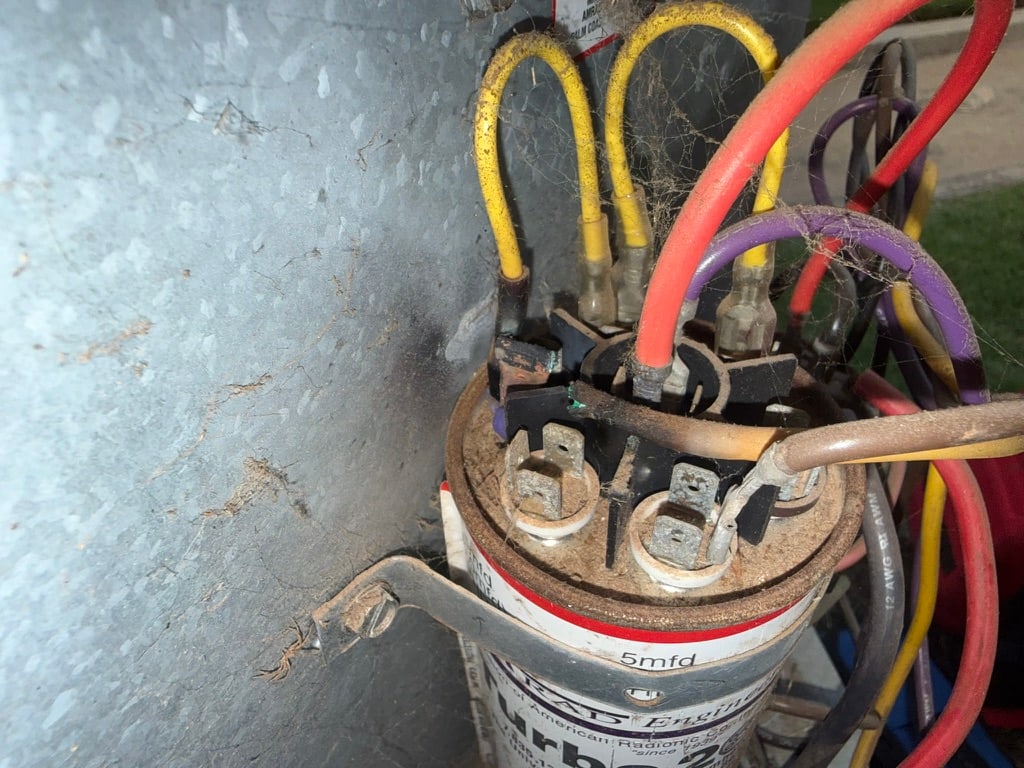
Most homeowners do not think about the wiring inside the outdoor air-conditioning unit until something fails. The condenser cabinet lives outside through Oklahoma heat, wind, rain, red dirt, cottonwood, grass clippings, insects, and years of vibration. Electrical connections that were tight years ago can loosen. Contactors can pit and arc. Capacitor terminals can corrode. A wire end can heat up until the insulation discolors, melts, or burns.
On this Norman call, the visible problem was a burned electrical connection near the outdoor unit controls. A failure like that can interrupt the compressor, condenser fan, or low-voltage control circuit depending on where it happens. The result for the homeowner is usually simple: the system stops cooling, runs strangely, trips a breaker, or makes a concerning electrical sound.
The priority on an evening call is not to turn the visit into a long lecture. It is to make the equipment safe, diagnose the failed point, repair the damaged connection correctly, and confirm whether the system can run without creating another hazard. That is what we did here. The burned wiring was corrected, the system was tested, and the homeowner had cooling again before the night settled in.
Why burned AC wires happen on older systems
A burned wire is usually a symptom of heat, resistance, age, or stress. Electricity does not like loose connections. When a spade terminal, contactor lug, or wire connection loses solid contact, resistance goes up. Resistance creates heat. Heat weakens the metal and insulation. That cycle can keep feeding itself until the connection chars, burns, or fails completely.
Older systems are more vulnerable because every part has lived through more run time. The condenser may have started thousands of times. The contactor may have opened and closed for years. The capacitor may have weakened. The compressor may need more current to start than it did when the unit was newer. Even when the system is still worth repairing, those age-related changes matter.
That is why we look past the obvious burned spot. Replacing a terminal without checking the surrounding electrical parts is a half answer. A good AC repair visit should include voltage checks, amp draw, capacitor readings, contactor condition, wire condition, and a test run. If the root issue is a loose terminal, the repair is one thing. If the compressor is pulling high amperage, the conversation changes. The point is to find the truth before recommending the next step.
- Loose or corroded terminals can overheat under load.
- Weak capacitors can make motors start harder and stress wiring.
- Pitted contactors can create poor contact and electrical arcing.
- A dirty condenser coil can raise operating pressure and make the system work harder.
- Age, vibration, and outdoor exposure can all contribute to electrical failures.
The next-day tune-up mattered as much as the emergency repair
Getting the air conditioner running before nightfall solved the urgent comfort problem. The follow-up tune-up solved a different problem: uncertainty. When a homeowner has older equipment, they need to know whether the system is simply aging, whether it is in danger of another breakdown, and whether it is still reasonable to maintain.
The next day, TradeStrong inspected and tuned up both systems at the property. That gave us time to look at electrical components, refrigerant behavior, airflow, coil condition, drain performance, thermostat operation, and the overall health of each unit. On older systems, a tune-up is not just a checklist. It is a reality check.
This is also where honest service matters. Some companies treat an older system as an automatic replacement lead. We do not. Older equipment deserves a clear evaluation. Sometimes replacement is the smart recommendation, especially if a compressor is failing, a coil is leaking badly, parts are unavailable, or repair costs no longer make sense. But sometimes the system still has useful life left. When that is true, the homeowner should be allowed to maintain it without being pressured into a new install.
One system was low on R-22. That does not always mean replacement today.
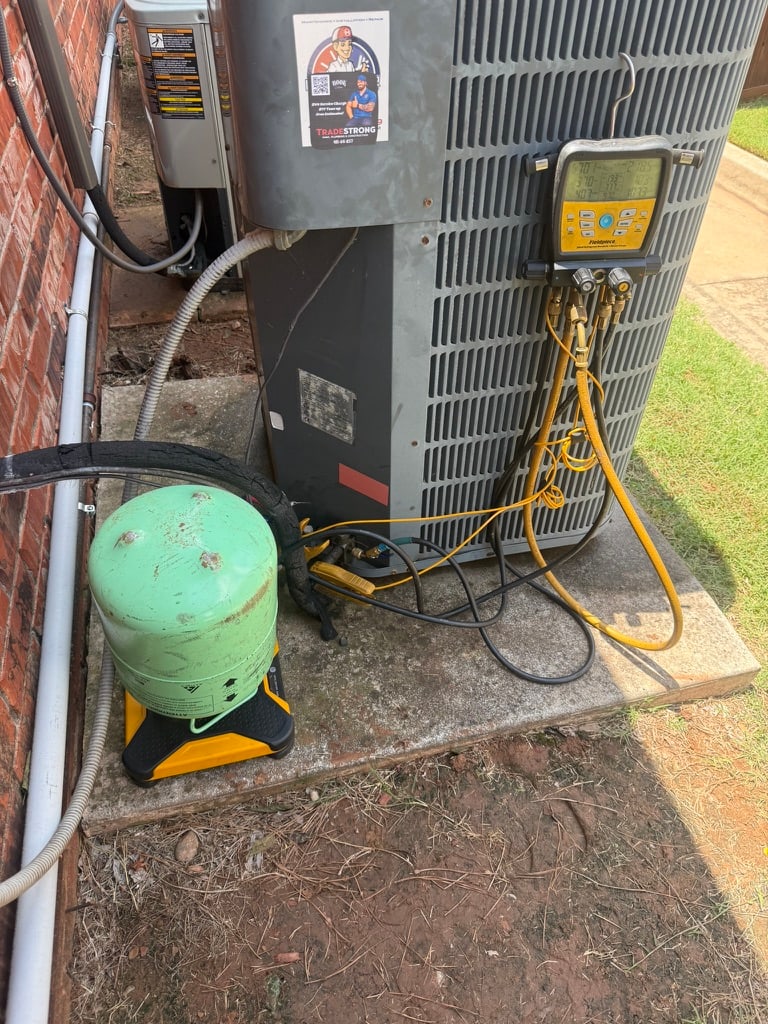
One of the systems on this job was low on R-22. R-22 is the older refrigerant used in many air conditioners installed before the industry moved to newer refrigerants. New R-22 equipment has been out of the residential market for years, and virgin production and import of R-22 ended in the United States. That limited supply is part of why R-22 costs more than newer refrigerants.
Here is the part homeowners need to know: being low on R-22 means the system has lost refrigerant somewhere. Air conditioners do not consume refrigerant like a car consumes fuel. A proper conversation should include leak history, how low the system is, how long it has been since the last charge, how the system is performing, and whether leak search or replacement planning makes financial sense.
What should not happen is using R-22 as a pressure weapon. We have seen homeowners told that R-22 is so expensive they might as well replace the whole system immediately. Sometimes replacement really is the best path. But not every low R-22 system needs to be condemned on the spot. If the unit is otherwise running, the leak appears slow, and the homeowner understands the tradeoff, adding refrigerant can be a reasonable way to buy time.
Our R-22 pricing: $250 per pound, explained plainly
TradeStrong sells R-22 for $250 per pound. We say that plainly because homeowners deserve to know the number before the decision gets emotional. R-22 is more expensive than common modern refrigerants, but we do not inflate it just to make replacement look like the only option.
The right amount depends on the system, the measured charge, temperature conditions, and the manufacturer's charging method. A technician should not guess. The system needs to be evaluated with gauges, temperature readings, airflow awareness, and basic operating data. Adding refrigerant blindly can hide a bigger issue, waste money, or leave the system still performing poorly.
On this Norman job, the goal was to help the homeowner make an informed decision. The system was older and low on R-22, so we talked through what that meant. We did not pretend R-22 is cheap. We also did not use it as a scare tactic. There is a middle ground between ignoring an aging system and forcing a replacement before the homeowner is ready.
- R-22 is limited and expensive, but the price should still be transparent.
- A low charge usually means there is a leak somewhere in the system.
- Small top-offs can make sense when the homeowner understands the risk and timeline.
- Repeated refrigerant loss should lead to leak diagnosis or replacement planning.
- The most honest answer depends on the equipment, not a sales script.
Repair versus replacement: how we talk through older AC systems
For homeowners in Norman, older HVAC equipment creates a practical question: how much money should you keep putting into the machine? There is no single answer that fits every home. A lightly used system with a minor electrical repair is different from a unit with a failing compressor and a leaking evaporator coil. A homeowner planning to move soon may make a different decision than a family trying to settle into the house for the next decade.
Our job is to explain the condition of the equipment in plain language. If a repair is reasonable, we say so. If replacement planning would be wise, we say that too. What we avoid is the false urgency that makes people feel cornered. A hot house is already stressful enough. The technician should bring clarity, not panic.
On this call, the immediate repair restored cooling, and the follow-up inspection gave the client a fuller picture of both systems. That is the kind of service we believe in: handle the urgent failure, inspect the whole system, explain the options, and help the homeowner choose the next step based on facts.
What Norman homeowners can watch for before an AC electrical failure
You do not have to open your condenser cabinet to notice early warning signs. In fact, homeowners should leave the electrical compartment closed unless they are trained to work on live HVAC equipment. But you can pay attention to how the system behaves.
If the outdoor unit hums but does not start, starts and stops quickly, trips a breaker, smells hot, or makes a buzzing sound near the electrical panel or condenser, shut it off and schedule service. If the air conditioner seems to need longer run times than usual, struggles during peak afternoon heat, or has not been cleaned and checked in more than a year, a tune-up can catch problems while they are still manageable.
A good maintenance visit will not make an older system new again, but it can reduce surprises. Cleaning coils, checking capacitors, tightening electrical connections, measuring amp draw, clearing drains, and verifying refrigerant performance all help show what the system is doing under real operating conditions. That information is valuable whether you repair, maintain, or start budgeting for replacement.
Honest HVAC service in Norman, Moore, and the OKC metro
TradeStrong HVAC & Plumbing serves Norman, Moore, Oklahoma City, Edmond, Yukon, Mustang, Midwest City, Choctaw, and nearby communities. We handle AC repair, HVAC maintenance, heating service, plumbing repairs, water heaters, drain work, and honest replacement planning when replacement is truly the right answer.
This Norman call is a good example of how we like to work. A burned wire caused an urgent no-cool situation. We repaired it before nightfall. Then we came back, inspected both systems, found one low on R-22, and helped the homeowner understand the options without overcharging for refrigerant or pushing a system sale as the only answer.
If your AC is older, low on refrigerant, showing electrical issues, or simply not keeping up with Oklahoma heat, we can take a look. We will tell you what we find, what it means, and what we would do if it were our home.
Official R-22 phaseout resource
For federal guidance on HCFC-22, also known as R-22, and the U.S. phaseout schedule for Class II ozone-depleting substances, see EPA's phaseout resource.
EPA: HCFC-22 and Class II ODS PhaseoutFrequently asked questions
Need an honest AC repair opinion in Norman?
Call TradeStrong for AC repair, R-22 system service, tune-ups, and straight repair-versus-replacement guidance across Norman, Moore, and the OKC metro.