

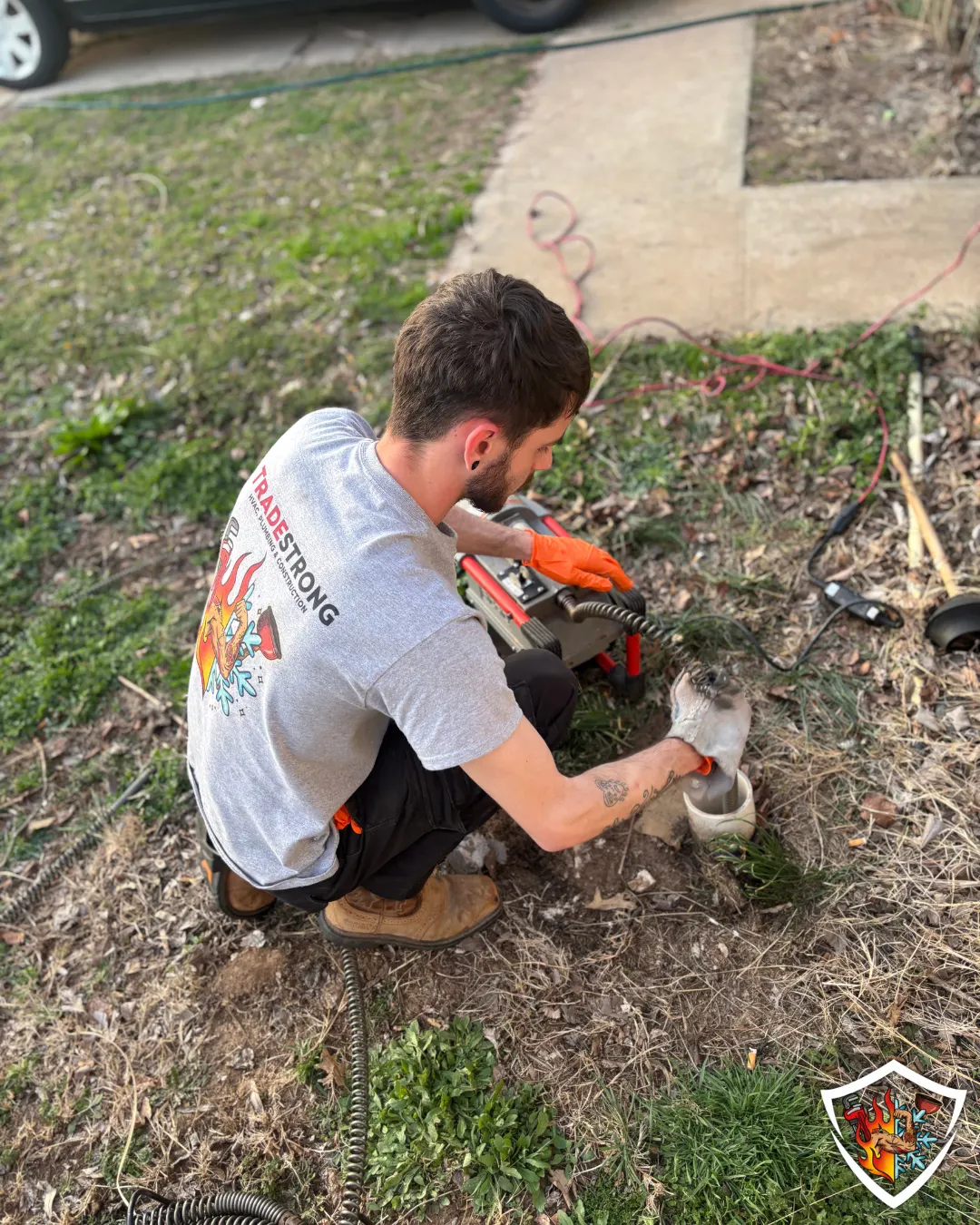
Common Signs a Drain Needs Cleaning, Repair, or Replacement
Tell us which fixtures are affected, when the problem started, and whether it has happened before. One slow sink suggests a different starting point from wastewater backing up across several fixtures. Look for these signs:
- Slow-draining kitchen sinks, bathroom sinks, tubs, or showers
- Water backing up from one fixture when another fixture runs
- Gurgling sounds from a toilet, tub, shower, or floor drain
- Wastewater backflow, especially at the lowest drain in the home
- A continuous sewage smell around drains or outside cleanouts
- Clogs that return soon after plunging or using a hand snake
- Laundry drain problems when the washer discharges
- Kitchen grease buildup that keeps narrowing the drain line
- Wet cabinet bottoms, wall stains, or soft flooring near drain piping
- Older cast iron, galvanized, or damaged drain pipe that leaks or keeps backing up
What Usually Causes Drain Backups
Hair, soap residue, food debris, grease, or a trapped object can block a fixture or branch drain.
Kitchen grease cools inside the pipe and catches more debris. Hot water may move it farther downstream without removing it.
Multiple slow fixtures may share a restricted branch or main sewer line. The lowest drain may back up first.
Roots, offset joints, damaged pipe, or a sagging section can cause recurring stoppages. Cleaning may restore flow without correcting the defect.
Leaking traps, cracked pipe, and failed drain connections need repair rather than another pass with a cable.
Need Drain cleaning · Moore & the OKC metro?
TradeStrong can inspect the issue, explain the repair, and help you decide what needs to happen now versus what can wait.
Homeowner-Safe Checks Before You Call
Before the visit, gather a few details and prevent more wastewater from entering an already backed-up line.
- Notice whether one fixture is slow or several fixtures are slow. That pattern tells a lot.
- Stop running water if sewage or dirty water is backing up into the home.
- Do not pour grease down the drain, even with hot water. Wipe grease into the trash instead.
- Avoid chemical drain openers. They can damage skin, eyes, lungs, pipes, and septic systems.
- Use a plunger only when it is safe and the fixture is not overflowing.
- If you know where the cleanout is, keep the area accessible for service.
How TradeStrong Handles Drain Cleaning & Drain Repair
Our standard commercial cable-machine clearing service is $279. Camera inspection, excavation, and pipe replacement are separate work; we explain the scope before recommending those services.
We ask which fixtures are affected and whether previous clearing helped. A fixture trap, branch drain, and main sewer line require different access and equipment. Tell us about any drain chemicals already used, and keep the cleanout and affected fixtures accessible.
We try to clear the line first. If it will not clear or repeatedly backs up, camera inspection helps identify the reason. We show the customer video evidence before recommending a major underground repair.
You cannot snake out a pipe belly. A cable can clear material inside the pipe, but it cannot lift a sagging section or restore its slope. Correcting that defect requires access to the affected pipe and properly supported replacement work. A camera finding does not mean excavation has already happened.
Homeowner Guide
Single Fixture Clog vs. Main Line Warning Signs
Tell us if a toilet bubbles when the washer drains or a tub backs up when another fixture runs. Those connections help narrow the investigation.
Several affected fixtures can point toward a shared line. Stop using water if wastewater is backing up. Running the washer or repeatedly flushing may add water faster than the restricted line can carry it away.
Odor alone does not prove a sewer blockage; a dry trap or venting issue can also cause smells. Describe any odor along with gurgling, slow drainage, visible leaks, or backflow instead of assuming the entire sewer needs replacement.
One Fixture
Usually points to a trap, stopper, branch line, disposal, or local buildup near that fixture.
Several Fixtures
Can point to a shared branch line or private sewer line restriction that needs faster diagnosis.
Backflow or Odor
Treat wastewater backflow and continuous sewage smell as warning signs, not normal drain behavior.
Why Moore Homeowners Call TradeStrong
We explain what we found and the recommended scope. One damaged section does not automatically mean the entire line needs replacement.
After clearing, keep grease and food scraps out of kitchen drains, use hair screens, and put wipes in the trash. If trouble returns, note how soon and which fixtures are affected. That history helps us decide whether another cleaning makes sense or the line needs inspection.
Related pages: plumbing services, water heater service, water leak detection, about TradeStrong, customer reviews, contact TradeStrong.
Recent Moore work: kitchen sink grease clog cleared in Moore, plus a documented toilet obstruction diagnosis and removal.
Frequently Asked Questions
Drain Cleaning & Drain Repair FAQs
Why do my drains keep clogging?
Buildup, roots, damaged pipe, or poor slope can cause repeat clogs. If clearing does not last, we recommend investigating the cause.
What if more than one drain is slow?
More than one slow drain can point to a shared branch line or a private sewer line issue. If the lowest fixtures are backing up or gurgling, stop using water and schedule service.
What does a sewage smell mean?
A dry trap, vent problem, or drainage restriction can cause odor. Smells with backflow or slow drainage need attention.
Should I use drain cleaner or call a plumber?
Avoid chemical drain openers as the default fix. They can be hazardous and may not address the real restriction. A plumber can clear the drain safely and help determine whether the better fix is drain cleaning, drain repair, or drain replacement.
Do I need drain repair or drain replacement?
Cleaning removes restrictions. Repair addresses defects such as leaks, cracks, or sagging pipe. We explain the evidence and whether a targeted repair is appropriate.