

HVAC Repair
A Backed-Up HVAC Drain Caused Major Ceiling Damage in This Edmond Home
Written and reviewed by Keyton Forren, founder and licensed HVAC and plumbing contractor · Updated August 25, 2026
Water from a ceiling pipe is a warning, not a normal drain
If the pipe above your garage is dripping, turn the cooling system off and schedule HVAC service. It often means the primary condensate drain is already clogged and the emergency pan is collecting water.
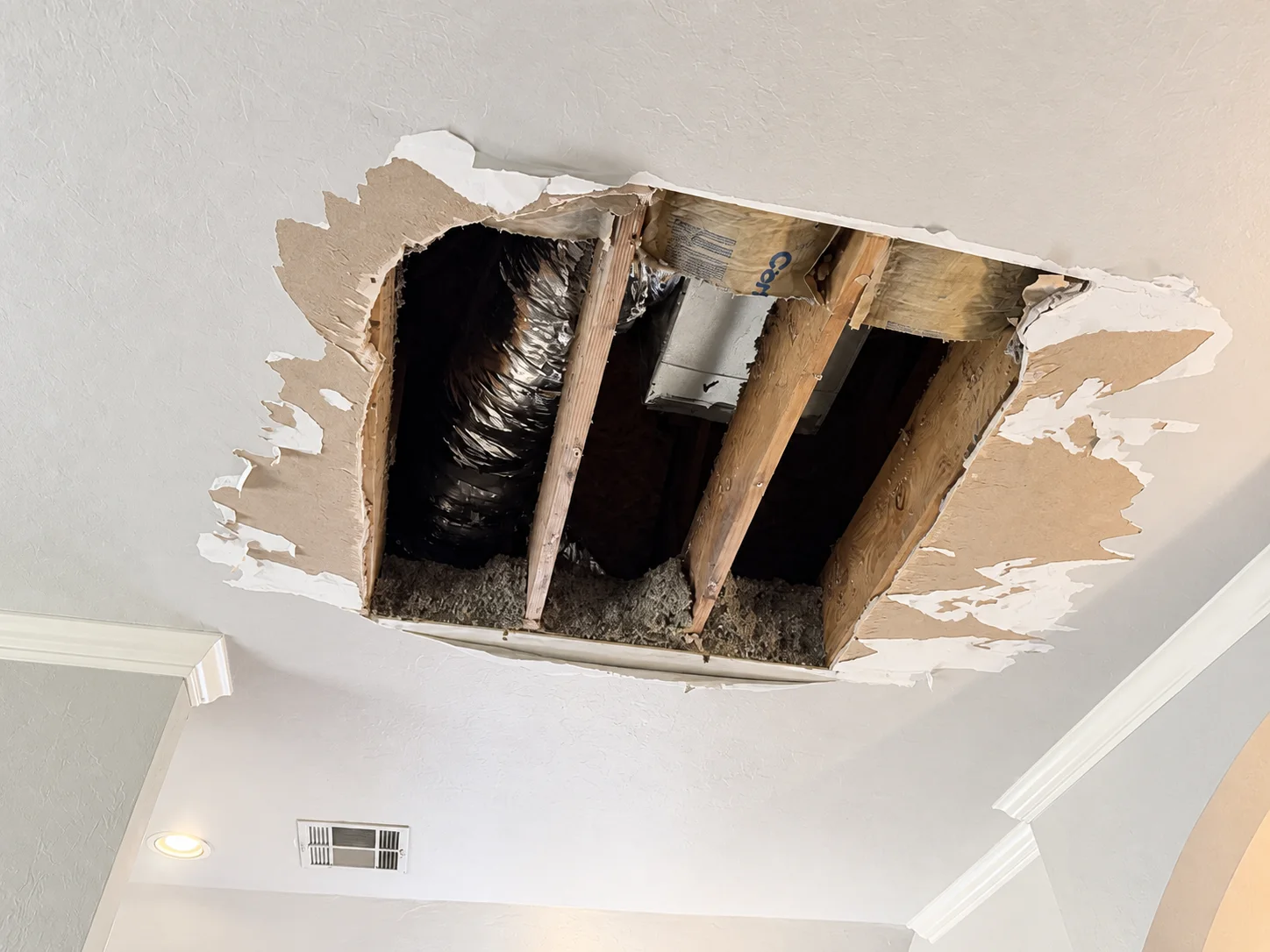
The call started with extensive ceiling damage at an Edmond property. The attic air-conditioning system's primary condensate drain had backed up, water had collected in the emergency drain pan, and the overflow eventually damaged the ceiling below.
We removed the standing water, cleared and tested the condensate drain, installed a Jones valve so a technician can connect a nitrogen bottle directly to the drain for future service, and replaced the garage-terminating secondary drain connection with a float switch. If water rises again, the switch can shut the system down before the pan overflows.
What caused the water damage?
Air conditioners remove humidity while they cool. That moisture collects at the evaporator coil and normally leaves the home through a primary condensate drain. Slime, dust, algae, insulation debris, or other buildup can restrict that small drain line. Once the primary line stops draining, water can spill into the emergency pan beneath an attic unit.
At this Edmond property, the backed-up drain left standing water in the condensate system and emergency pan. The warning was not caught before water reached the ceiling assembly, resulting in a large damaged area that had to be opened.
What is the PVC pipe sticking out of my garage ceiling?
In many older Oklahoma installations, a short PVC pipe in the garage ceiling is the outlet for the HVAC emergency pan or secondary condensate drain. Installers intentionally placed it somewhere visible. Water from that pipe was meant to alert the homeowner that the primary drain had backed up—not to serve as the system's everyday drain.
That older warning method only works when someone notices the water quickly. A drip can be overlooked, a vehicle can hide the wet spot, or the drain pan can overflow elsewhere first. That is why a float switch is a valuable upgrade on an attic system.
- A dry garage-ceiling pipe may simply be an emergency HVAC drain outlet.
- Water dripping from it usually means the primary condensate drain needs service.
- Do not cap the pipe or assume the leak is coming from a plumbing supply line.
- Turn the AC off if water is actively draining or the ceiling is wet, then call an HVAC professional.
Why is water dripping from a pipe in my garage ceiling?
The most common reason is a clogged primary AC drain. Condensate is being diverted into the emergency pan and out through the visible secondary line. Other possibilities include a cracked or poorly pitched drain, a frozen evaporator coil thawing, an overflowing pan, or a condensate pump failure.
The location of the drip does not prove the exact cause. A technician should inspect the attic equipment, both drain paths, the drain pan, coil condition, and any safety switches before putting the system back into normal operation.
How we corrected this Edmond HVAC drain backup
First, we removed and vacuumed the standing water from the condensate area and emergency drain pan. We then cleared the obstruction, restored drainage, and tested the line to confirm that water was leaving properly.
We added a Jones valve to create a dedicated service point in the condensate line. It allows a nitrogen bottle to connect directly to the drain so a technician can clear the line in a controlled way during future maintenance instead of cutting and rebuilding the PVC each time.
We also installed a float switch in place of the secondary drain that terminated in the garage. If the primary drain backs up and the water reaches the switch, it interrupts the cooling call and shuts the system down. The loss of cooling gets attention before an unnoticed overflow can create another ceiling repair.
- Removed standing water from the condensate system and emergency pan
- Cleared and tested the primary condensate drain
- Installed a Jones valve for direct nitrogen drain-service access
- Installed a float switch to shut down the system if water rises
- Verified that the system was draining and operating correctly before departure
How often should an AC drain line be cleaned or blown out?
Have the condensate drain inspected and cleared at least once each year, ideally before Oklahoma's heavy cooling season. Because the AC produces condensate for months at a time, annual service helps remove developing buildup before it becomes a complete blockage.
Some systems need attention more often. Long horizontal runs, poor slope, recurring algae, dusty attic conditions, or a history of backups can justify checking the drain during both spring and fall maintenance. The right interval depends on the installation and what the technician finds—not just the age of the equipment.
Drain service should include more than forcing pressure into an unknown blockage. The technician should verify the drain route, protect the coil and pan, use an appropriate method, and confirm flow afterward. A Jones valve or another properly installed access point makes future cleaning safer and more repeatable.
Warning signs your AC condensate drain is clogged
A float-switch shutdown can feel like an inconvenient no-cool call, but it may be doing exactly what it was installed to do. Do not bypass the switch. Find out why water reached it before restarting the equipment.
- Water in the emergency pan beneath an attic unit
- Water dripping from a PVC pipe above the garage, a window, or an exterior doorway
- Wet drywall, ceiling stains, bubbling paint, or a musty odor
- The AC shuts off even though the thermostat is calling for cooling
- Water around the indoor air handler or furnace
- Gurgling or slow drainage at the condensate line
Preventing HVAC drain water damage
Annual HVAC maintenance is the best time to inspect the condensate system, clear the drain, test the pan, and verify that the float switch shuts the equipment down. For attic systems, those inexpensive safeguards can help prevent a repair that involves insulation, drywall, texture, paint, flooring, and personal property.
If you do not know where your primary drain exits, what the pipe in your garage ceiling does, or whether your attic unit has a working float switch, ask the technician to show you during the next service visit. A five-minute walkthrough can make the early warning signs much easier to recognize.
Annual HVAC maintenance
TradeStrong's HVAC maintenance includes a condensate drain flush along with checks of the coils, electrical components, refrigerant, thermostat, and airflow.
View TradeStrong HVAC MaintenanceFrequently asked questions
Is your AC drain dripping or backing up?
Schedule HVAC drain service before a small clog becomes ceiling damage. TradeStrong serves Edmond and communities across the Oklahoma City metro.