

Fire Damaged the Furnace—We Replaced It
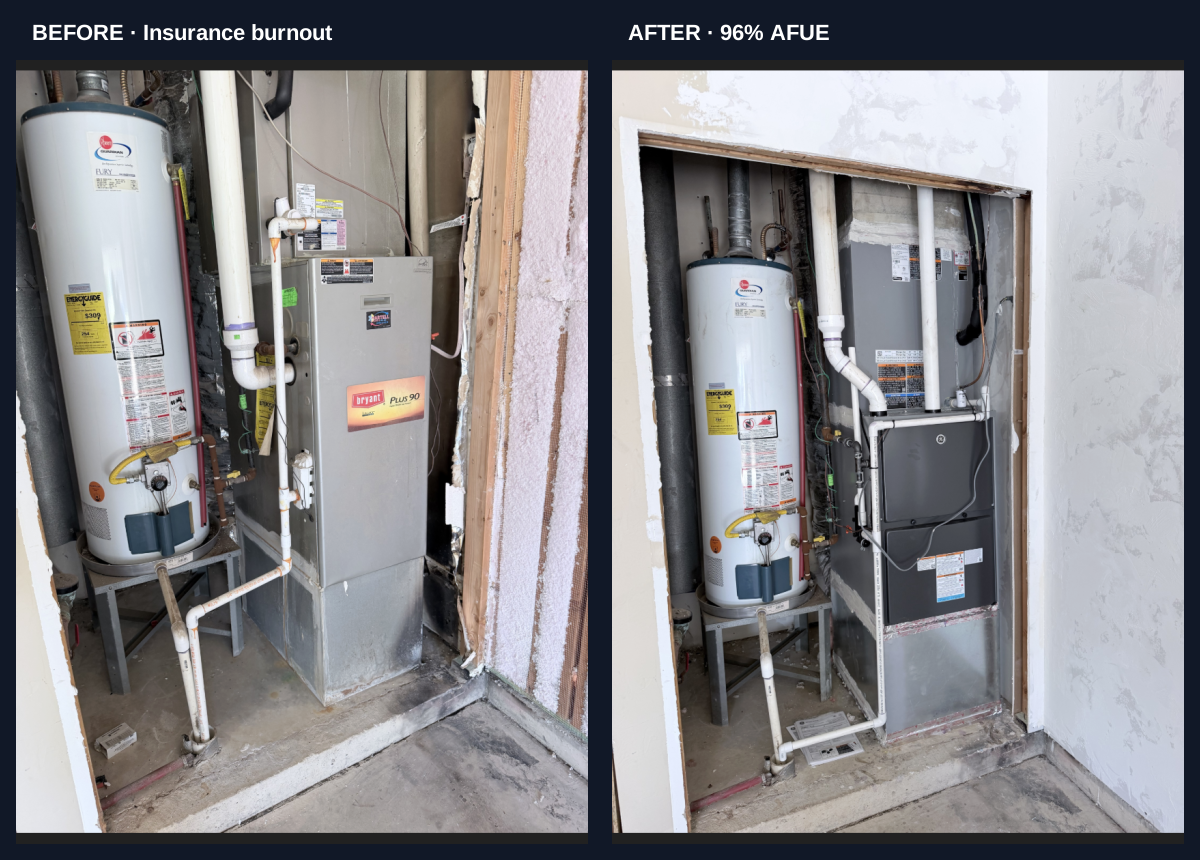
This Choctaw insurance job needed a furnace replacement after a fire damaged the existing Bryant Plus 90. We installed a 96% AFUE condensing gas furnace. That keeps the home in the 90%-plus equipment category while providing a higher rated efficiency.
- Location: Choctaw, Oklahoma
- Reason for replacement: fire damaged the furnace
- Existing furnace: Bryant Plus 90
- Replacement: 96% AFUE condensing gas furnace
- System size: 4-ton HVAC system
- Efficiency: existing 90% furnace replaced with 96% AFUE equipment
90% Furnace Replacement Costs: Existing 90% vs. an 80% Conversion
The biggest price difference often comes from the work surrounding the furnace. A condensing furnace needs an approved venting arrangement and a reliable condensate drain. An existing 80% installation may not have either one. The equipment price is only part of that conversion. Access, pipe routing, electrical provisions, roofing work, and protection against freezing can change the labor involved substantially.
An attic furnace conversion in Choctaw is a good example. In an un-foamed, unconditioned attic, changing from a metal-flue 80% furnace to a direct-vent condensing model may require a new roof penetration and properly integrated flashing for separate intake and exhaust pipes. PVC is suitable only where the particular furnace instructions and applicable requirements allow it. Pipe diameter, equivalent length, slope, support, and termination clearances all matter. Two pipes through a roof are not a complete venting plan by themselves.
That cold attic also changes the drain plan. Where condensate piping is exposed to freezing, insulation and manufacturer-approved freeze protection may be necessary. That can include self-regulating heat trace compatible with the drain material, installed according to both the furnace and heat-trace instructions. Insulation slows heat loss; it does not create heat. The trap and any other water-holding components need attention too. A protected drain is part of protecting the ceiling below from backed-up water.
On some equipment comparisons, the condensing furnace cabinet alone can approach twice the cost of an 80% option. That is not a universal price ratio, and it is not an invoice figure for this project. Brand, capacity, staging, controls, and supplier pricing affect the comparison. A useful estimate separates the equipment from the venting, drainage, electrical, and access work so a homeowner can see what drives the difference.
When a home already has a 90% furnace, the replacement starts with an existing condensing installation. When a home has an 80% furnace, the conversion may involve adding venting and condensate provisions that were never there before. Existing pipes and connections still need evaluation for the new equipment, especially on a job involving burn damage. The estimate should reflect what can properly remain and what needs replacement.
90% Furnace Replacement: Oklahoma Efficiency and Savings
High efficiency gas furnace replacement deserves honest math. AFUE describes seasonal fuel efficiency, not a guaranteed reduction in the entire utility bill. For the same delivered heat, moving from 80% to 90% AFUE reduces calculated heating fuel use by about 11.1%, not 10% of every gas charge. Moving from 80% to 95% reduces it by about 15.8%. Water heating, cooking, fixed service charges, and electric blower consumption are separate.
Oklahoma winter operating hours vary with house size, insulation, air leakage, thermostat settings, weather, and furnace capacity. There is no single statewide burner-hour figure that accurately describes every home. As a historical reference, EIA’s 2020 residential survey reports 42.59 million Btu of annual natural-gas space-heating use per Oklahoma household using that fuel and end use. Dividing that input energy by an illustrative 80,000-Btu-per-hour input produces roughly 532 equivalent full-input hours. That is a calculated comparison, not measured runtime for this Choctaw home or a forecast for the coming winter.
For a separate, simple budget example, assume an 80% furnace uses 600 therms a year for heating and the avoidable gas cost is $1.50 per therm. At the same delivered heat, a 90% furnace would use about 533 therms, saving approximately $100 a year. A 95% model would use about 505 therms, saving approximately $142. These are illustrative assumptions, not local price quotes or promised savings. Use your own bills and subtract the non-heating baseline before making the comparison.
Labor belongs in the calculation. Suppose a conversion adds $2,000 to the total installed price after all extra venting, drain protection, roofing, and labor are included. At $100 a year in fuel savings, simple payback is about 20 years before maintenance, financing, heat-trace electricity, and future price changes. That example explains why a complicated attic conversion does not pay for itself overnight. Obtain an itemized local estimate instead of treating a generic hourly labor rate as the cost of the job.
Gas prices can rise, but they also fluctuate. Higher future fuel prices would increase dollar savings; lower prices would reduce them. EIA publishes Oklahoma residential price histories, but a statewide average is not the marginal rate on your bill. We do not build a replacement recommendation around guaranteed energy inflation. Comfort, condition, repair exposure, and the amount of installation work matter alongside fuel savings.
The furnace we installed on this insurance job is rated at 96% AFUE. At equal delivered heat, a 96% furnace uses about 6.25% less heating fuel than a furnace rated at exactly 90% AFUE. That is a calculated efficiency comparison, not a measured bill reduction for this home. Actual savings depend on the old unit’s specific rating and condition, weather, and heating demand. The fire damage drove the replacement; the new furnace also has a higher efficiency rating.
90% Furnace Replacement: Condensate and Freeze Protection
Homeowners sometimes say a high-efficiency furnace “sweats” in winter like the AC does in July. Both systems can produce liquid water, but the source is different. An air conditioner condenses moisture from indoor air on its cold evaporator coil. A condensing furnace recovers enough heat from combustion exhaust that water vapor in that exhaust becomes liquid. The secondary heat exchanger captures useful heat that a less efficient furnace would send out with hotter flue gas.
That water has to leave through the furnace’s condensate system. The trap, drain routing, slope, and approved disposal point are operating components, not optional plumbing details. A restriction can interrupt operation or cause water to back up. Service should follow the specific model instructions, including requirements for the trap and any condensate pump or neutralizer used in that installation.
A closet located within the home’s conditioned envelope generally has less freeze exposure than an unconditioned attic. A garage or exterior closet can still get cold enough to require protection. The location label alone does not settle it: we look at temperatures along the complete drain route, air leakage, and where water can collect. A short drain inside conditioned space is a very different problem from a long run beside an attic eave.
In an un-foamed Oklahoma attic, cold outdoor air can move through the space while the furnace continues producing condensate. A long, poorly sloped drain or exposed trap can freeze during a sustained cold spell. Appropriate insulation and approved heat trace help protect vulnerable components, but heat trace also needs a working electrical supply. Its presence does not overcome an installation that the furnace manufacturer prohibits in freezing conditions.
Before approving a condensing-furnace installation, ask where the water will drain, whether any part of that route can freeze, and how the installer will protect it. Ask how the trap will be accessed for service. Those details are easy to overlook when comparing equipment prices, but they make a real difference when the weather turns cold.
90% Furnace Replacement After Damage vs. Repairing an Existing Unit
An 80% furnace does not automatically need replacement because higher-efficiency equipment exists. If the system can be repaired safely, has acceptable operation, and the repair makes financial sense, keeping it can be a reasonable choice. A serious heat-exchanger problem, repeated breakdowns, or an expensive repair on an aging unit can change that decision. A homeowner needs a condition-based recommendation and a clear explanation of the options.
DOE currently lists a 95% AFUE minimum for covered non-weatherized gas and mobile-home gas furnaces manufactured on or after December 18, 2028. The 96% AFUE furnace installed on this Choctaw job is one percentage point above that scheduled minimum. The rule applies to covered new equipment; it does not require homeowners to remove an existing furnace. Covered 80% models manufactured before the compliance date remain subject to the earlier federal minimum, and local installation requirements still apply.
Choosing condensing equipment now can prepare a home’s venting and drainage for that equipment category, but “future-proof” is not a guarantee that every future furnace will use the same connections. We check the rule and the model requirements when quoting. A deadline is not a good reason to pressure a homeowner into replacing a safely repairable furnace, especially when the immediate budget is tight.
Using less gas for the same heating output reduces direct fuel consumption and associated combustion emissions. Statewide energy consumption per capita, however, includes industrial, transportation, and other uses; it does not tell us whether one Choctaw homeowner should replace a furnace. Household heating demand and the condition of the equipment are more useful for that decision. Air sealing and duct improvements can also reduce the amount of heat the home needs.
For real estate managers, the practical comparison includes repair cost, remaining service expectations, tenant comfort, downtime, and who pays the utility bill. A longer ownership horizon may support a larger efficiency investment, while a reliable repair may preserve needed cash today. A burnout replacement is a different situation from deciding whether to replace a functioning furnace for efficiency alone. Start with why the equipment needs attention, then compare the appropriate options.
Before and After: The Fire-Damaged Furnace and Its Replacement
The before image is on the left. It shows the existing Bryant Plus 90, with burn damage along the right side of the equipment space. The after image is on the right and shows the new 96% AFUE furnace. We replaced the fire-damaged unit and kept the home on condensing equipment.
The before photo shows the fire-damaged furnace and surrounding space. The after photo shows the replacement installed. This insurance job called for replacing the damaged 90% furnace, and that is what we got done.
Maintaining the Replacement 96% Furnace
A condensing furnace needs an open drain, a properly maintained trap, and a venting system that remains suitable for service. Arrange annual professional checks before the heating season. Where a system uses heat trace, the technician should check the supply and operation using the manufacturer’s prescribed procedure, including continuity checks where appropriate. Inspect insulation and condensate traps at the same visit.
For an attic system, an unnoticed drain problem can affect both heat and the ceiling below. Condensate drainage and trap service also matter in closets and garages. Ask your technician which components need annual attention and whether any freeze-protection equipment is installed on your system.
Need a 90% Furnace Replacement in Choctaw?
If your Choctaw home needs a furnace replacement after fire damage, contact TradeStrong to discuss the equipment and replacement work. We can also help you understand the costs and maintenance needs of a 90% furnace.
Use our Peace of Mind maintenance plan to stay ahead of condensate-trap service and annual heat-trace checks where that protection is installed. Reliable heating starts with equipment that fits the home and continues with attention to the details that keep it running.
Explore Peace of Mind Maintenance