

What This Edmond Sewer Repair Addressed
The repair addressed two affected sections of the sewer piping, followed by a continuous flow test through the exterior cleanout.
- Location: Edmond, Oklahoma
- Client: HCO Leasing
- Bellied section of piping removed
- Failed riser section removed
- 45-minute continuous hose test
- No backups observed during testing
The Repair and Flow Test
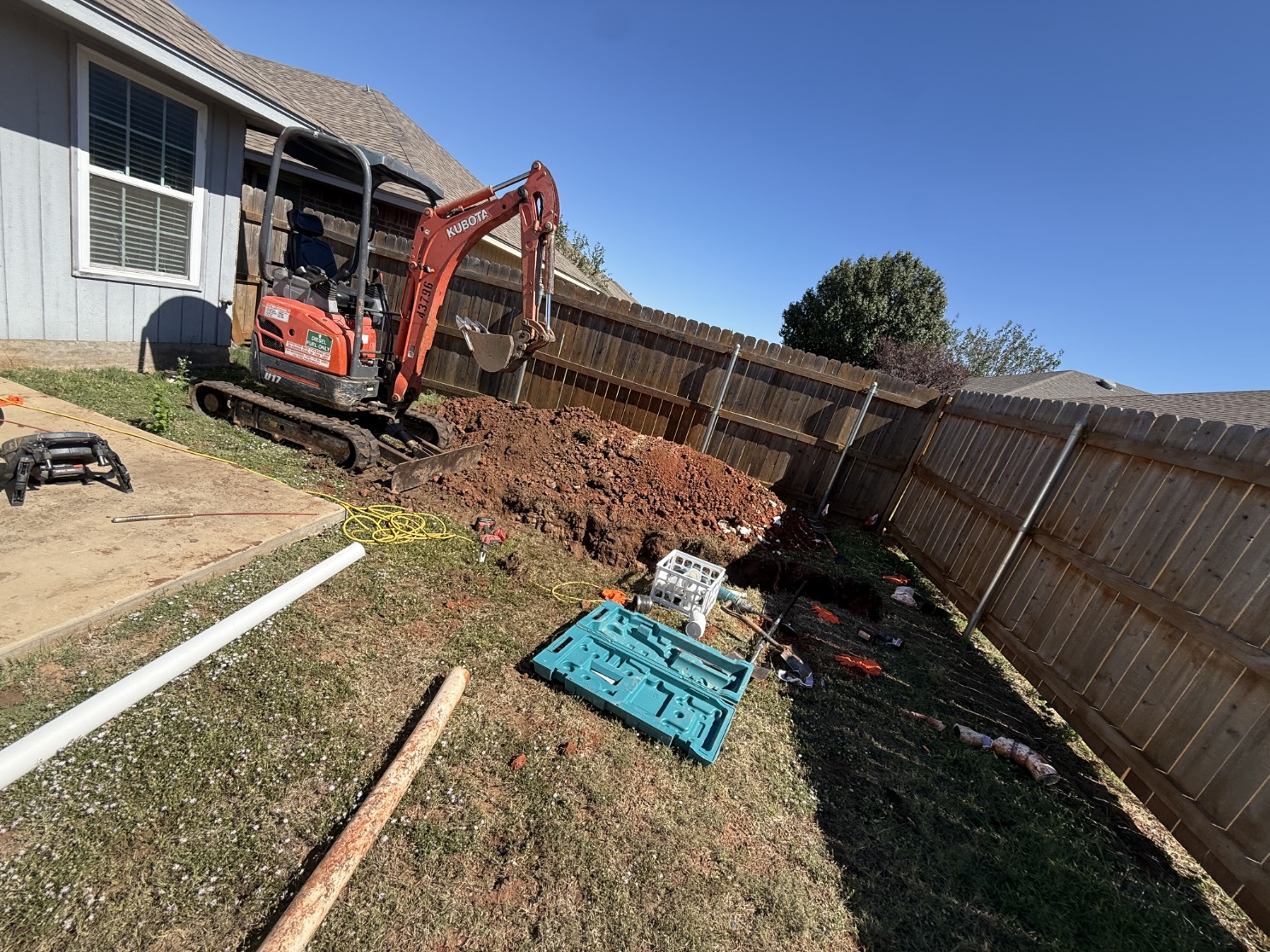
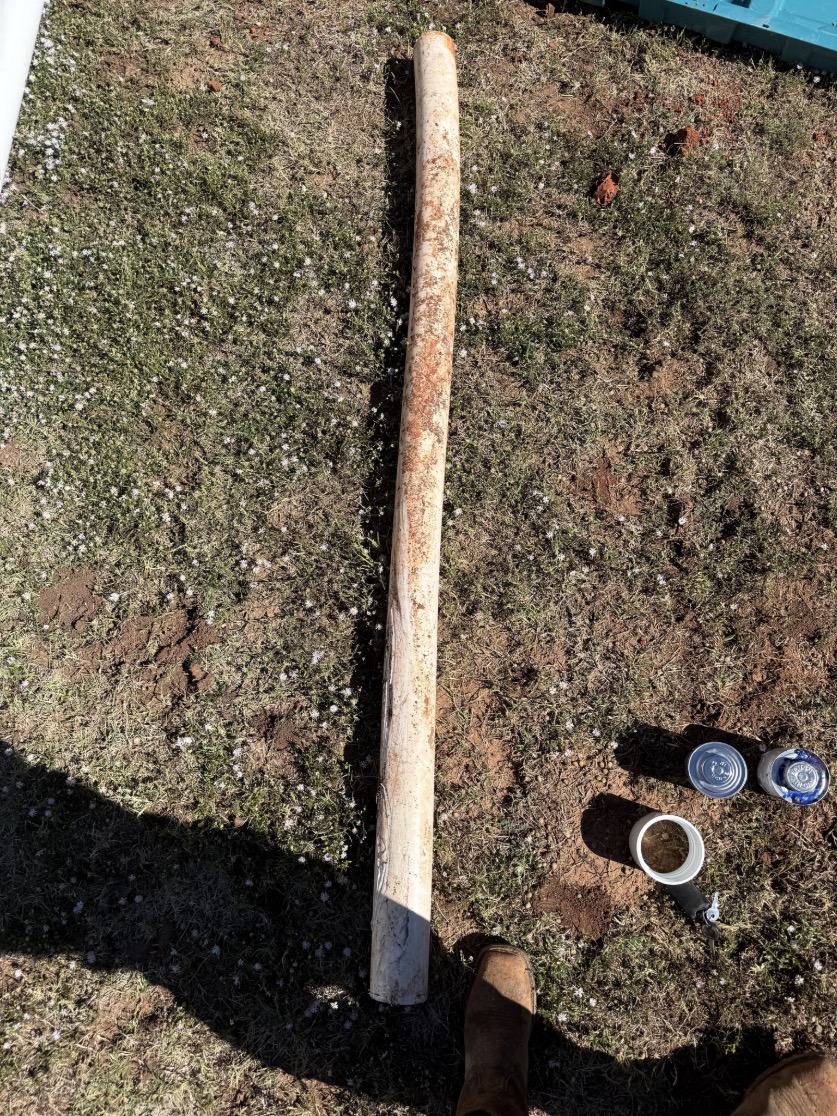
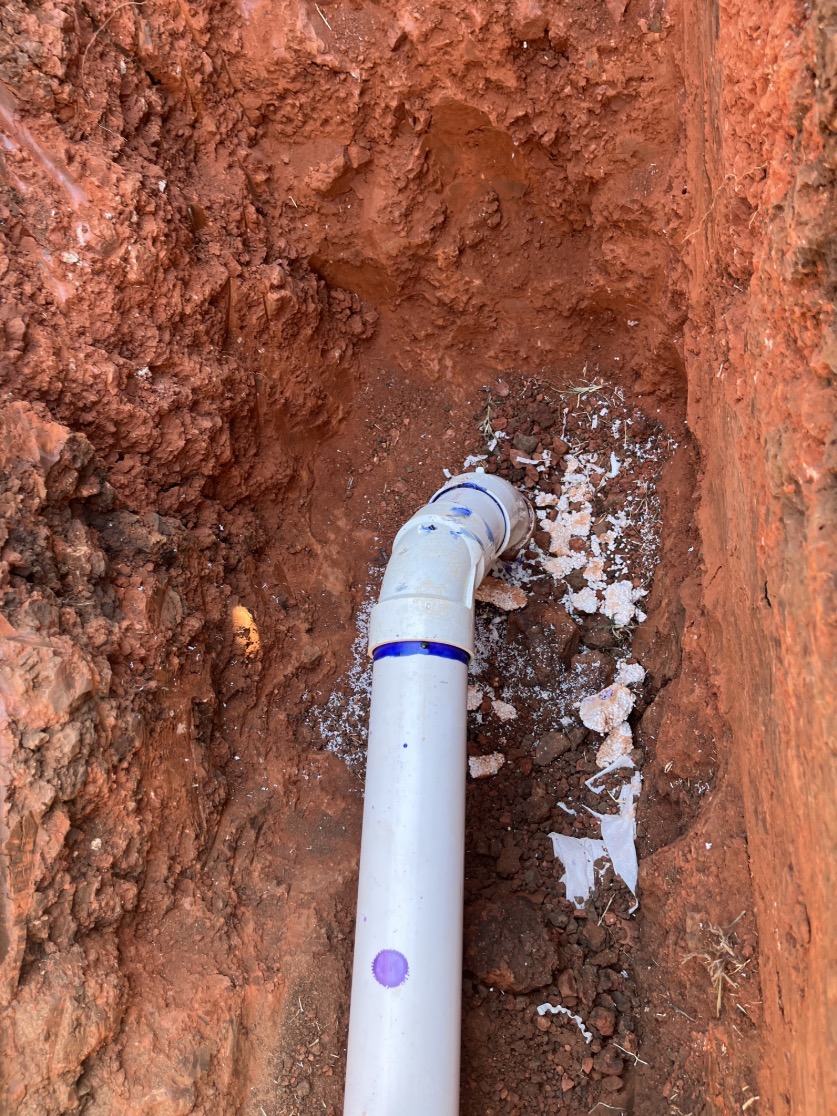
The job photos show excavation to reach the buried sewer piping, the removed pipe, and replacement piping in the open trench.
Once the repairs were complete, we ran water through the exterior cleanout continuously for 45 minutes to observe how the line handled the test flow.
- Accessed the affected sewer piping
- Removed the bellied piping and failed riser section
- Completed the sewer repairs
- Tested continuous flow for 45 minutes
No backups were observed during the test. This documents performance during testing; it does not, by itself, measure pipe slope or establish the condition of every remaining section.
Why a Sewer Belly Needs More Than Drain Cleaning
A sewer belly is a sag or low spot where wastewater collects instead of draining away. Solids can settle in that pocket and contribute to recurring blockages.
Cleaning may remove accumulated material and improve flow, but it cannot lift a sagging pipe or correct its slope. Correcting the low spot requires a repair that addresses the pipe’s grade and support.
Questions About Sewer Bellies
What is a sewer belly?
A sewer belly is a sag or low spot in a sewer pipe where wastewater collects instead of draining away. Sewer lines rely on gravity and a consistent downward slope. Solids can settle in the pooled water and contribute to recurring blockages.
How do you know if you have one?
Recurring clogs, multiple slow drains, gurgling toilets, and wastewater backups can signal a sewer problem. These symptoms do not prove there is a belly: roots, obstructions, or damaged piping can cause similar issues. A sewer camera inspection helps identify the cause and location before selecting a repair.
Can a new house have a sewer belly?
Yes. A newly installed line can have a low spot if its slope is incorrect or the soil supporting it settles. Proper bedding, support, and backfill matter regardless of the home's age.
Does standing water always mean a belly?
No. A downstream obstruction can also cause water to collect. Standing water must be evaluated in context, with the cause and extent established before excavation is recommended.
Can drain cleaning fix a sewer belly?
Cleaning can remove accumulated material and improve flow, but it cannot lift a sagging pipe or correct its slope. If the low spot remains, buildup may return. A physical repair is needed to correct the dip.
Can pipe lining fix it without digging?
Standard pipe lining follows the existing pipe's path, so it does not generally correct a belly. A sag may need a localized repair before the rest of the line can be lined. The right approach depends on the site and pipe condition.
Does the whole sewer line need replacement?
Not necessarily. If the defect is confined to one area and the remaining pipe is serviceable, a targeted repair may be appropriate. More extensive damage can require a larger replacement.
What affects the cost of a repair?
The depth and length of the affected pipe, access for excavation, nearby utilities, and the surfaces that need restoration all affect the scope. An on-site evaluation is needed for a meaningful estimate.
Recurring Sewer Backups in Edmond?
Tell TradeStrong which drains are affected and how often the problem returns. We can evaluate the sewer problem and discuss repair options based on the findings.
Explore Drain Cleaning and Repair