

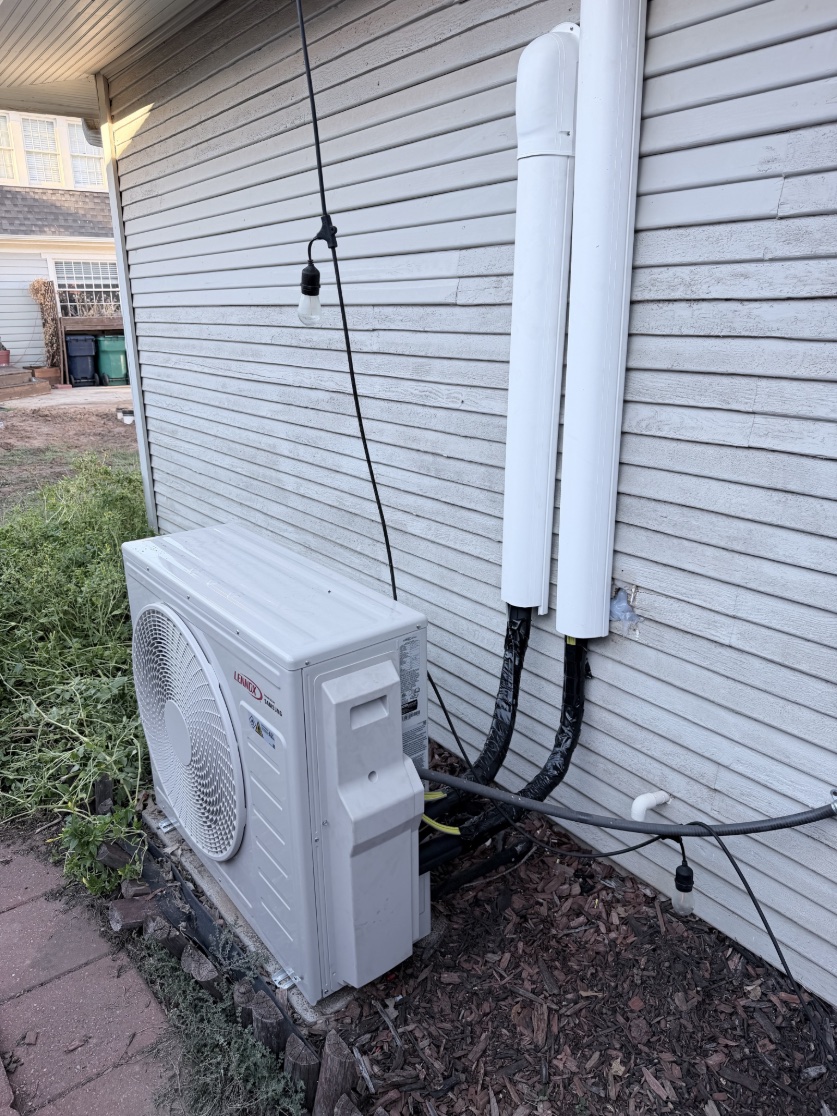
A Modern Solution for an Older Property
An older building’s layout can make conventional ductwork difficult to add. A multi-head mini-split connects multiple indoor units to a shared outdoor unit, allowing the comfort plan to follow the rooms and the way they are used.
- Location: Heritage Hills, Oklahoma City
- Project: Multi-zone mini-split installation
- Property: Existing older building
- Approach: Multiple indoor zones on a shared outdoor system
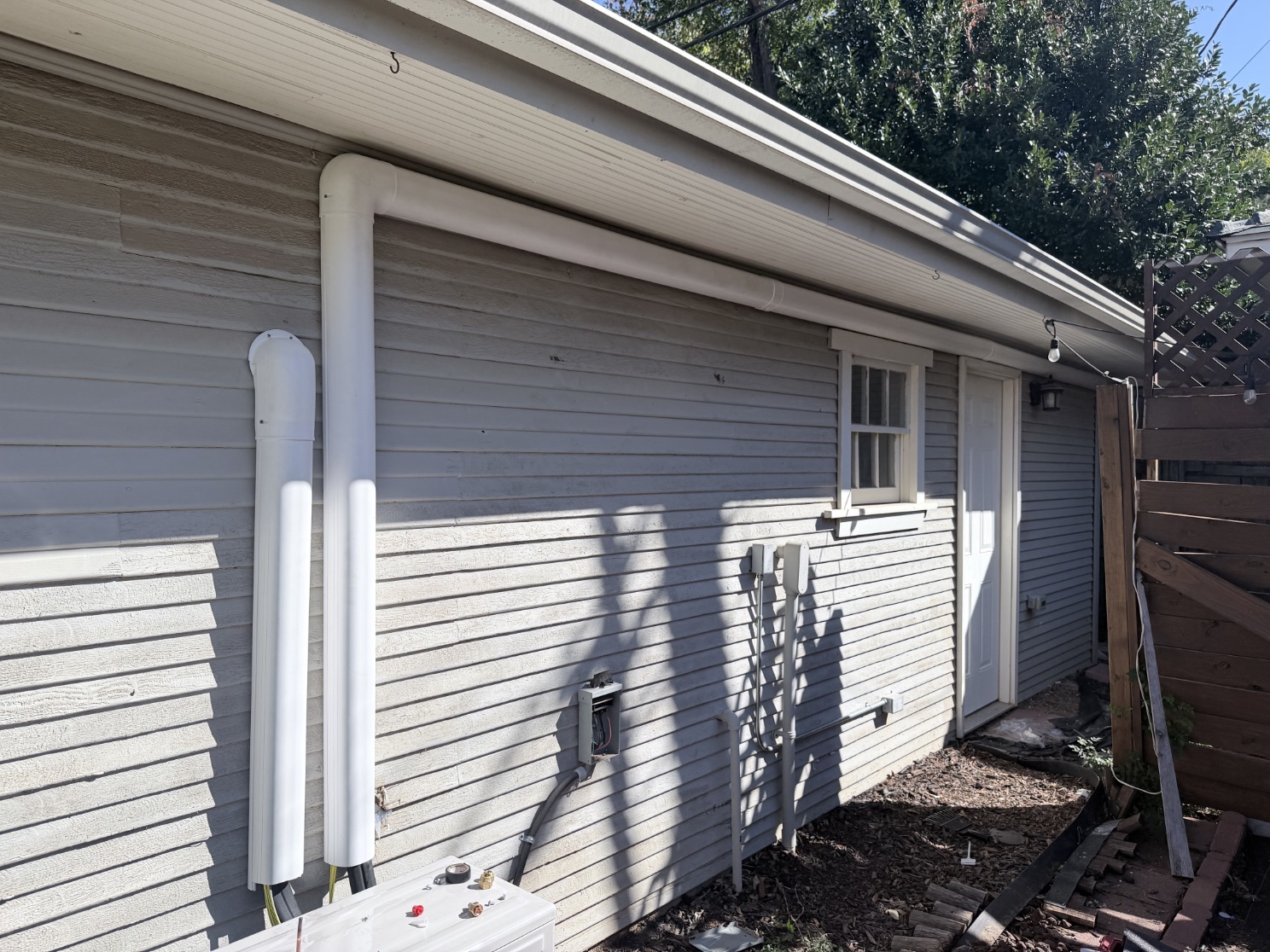
- Exterior finish: Line-set covers along the siding and eave
- Collaboration: Forge Restoration and Construction
Project Shout-Out: Forge Restoration and Construction
A big thank-you to Forge Restoration and Construction for collaborating with TradeStrong on this Heritage Hills OKC project. Bringing modern comfort into an older property takes coordination, and we appreciate the opportunity to work together.
Planning your own restoration or construction project? Visit Forge to learn more about their work.
What Are Those White Covers on the Outside Wall?
Those are line-set covers: exterior channels that conceal and help protect the insulated refrigerant tubing running between the indoor and outdoor equipment. Compatible wiring and condensate piping may also follow that route when the installation requirements allow it.
On this property, the covers run vertically up the siding and horizontally beneath the eave. Planning that path helps the installation follow the building’s lines. The covers add a finished appearance and help shield the enclosed materials from weather, sunlight, and incidental damage. They do not replace refrigerant-pipe insulation or proper sealing at wall penetrations.
How Can Mini-Splits Be Installed in an Older Home?
The starting point is a room-by-room load calculation and a look at the building’s insulation, windows, layout, and electrical supply. Age alone does not rule out modern heating and cooling; the system has to fit the actual property.
Indoor options can include wall-mounted heads, ceiling cassettes, floor consoles, or compact ducted units where compatible equipment and space allow. Piping may travel through accessible interior spaces or along the exterior in covers like the ones shown here. Every route also needs a workable condensate-drain plan.
- Size the system for each room’s heating and cooling needs
- Choose compatible indoor units and useful airflow locations
- Plan piping lengths, elevation changes, and service access
- Provide electrical service suited to the selected equipment
- Route condensate to an appropriate drain location
- Seal penetrations and protect exposed insulated piping
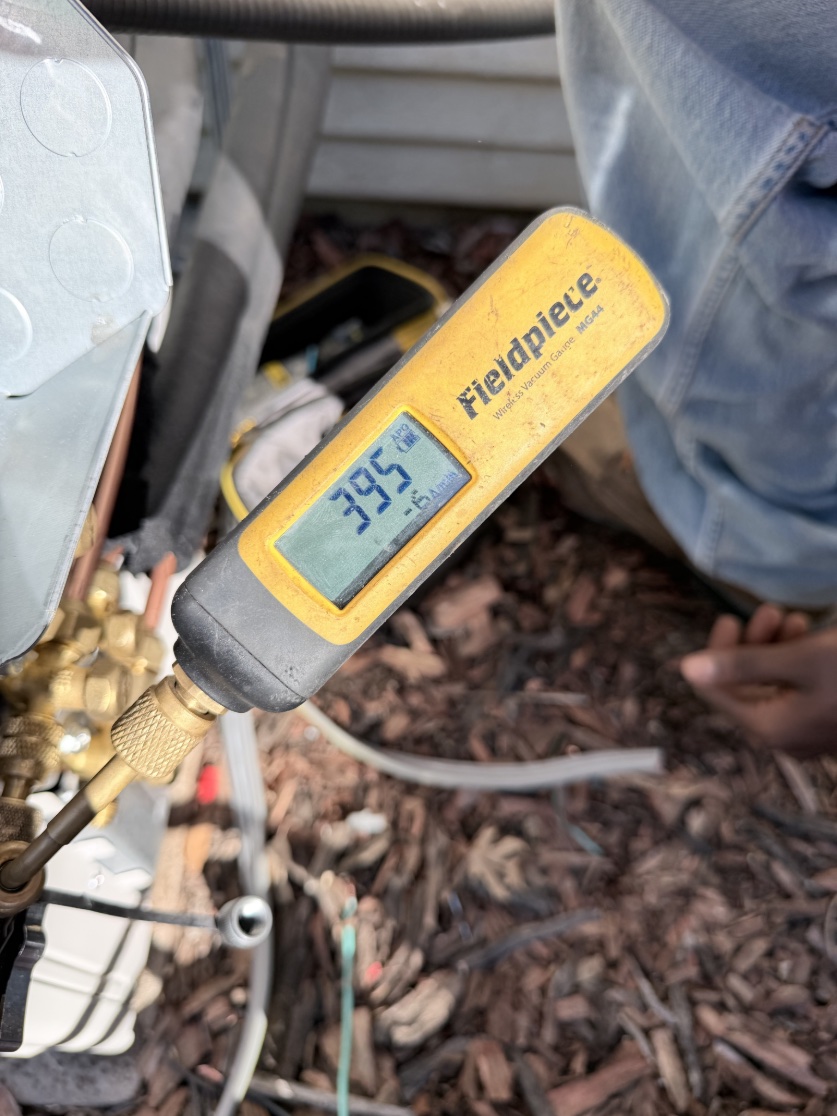
- Leak-test and evacuate according to manufacturer instructions
- Verify operation, drainage, and controls before handoff
These are the planning and commissioning steps that shape a good installation. The project photos below show the exterior line-set covers and one of the vacuum readings captured during this Heritage Hills OKC job.
Comfort That Fits the Building
A mini-split can be a strong option for a property with limited duct space, an addition, or rooms that are hard to keep comfortable. The best design balances indoor-unit placement, outdoor-unit clearances, piping routes, drainage, and the building’s appearance.
For an older home, we also consider air leakage and insulation. New HVAC equipment can improve comfort, but the building still affects how much heating and cooling it needs. We help you work through those details before choosing a system.
Multi-Head Mini-Splits: Common Homeowner Questions
What is a multi-head or multi-zone mini-split?
It is a system with more than one indoor unit connected to a shared outdoor unit. Each indoor unit serves a zone and typically has its own temperature setting. The outdoor unit’s available capacity is shared across the connected zones.
Can you install a mini-split in a very old house without existing ducts?
Often, yes. Ductless heads do not need a full duct system, making them useful for older homes. We still need to confirm room loads, mounting locations, electrical capacity, piping routes, and drainage. The building’s age alone does not determine what is possible.
Does every room need its own indoor head?
Not necessarily. An open area may work as one zone, while bedrooms behind closed doors often need their own comfort plan. The right number of heads depends on room layout, airflow, heat gain and loss, and the equipment’s approved combinations—not simply the number of rooms.
Can one room heat while another cools?
Most residential multi-zone mini-splits on one outdoor unit must share a heating or cooling mode, even though rooms can have different temperature settings. Simultaneous heating and cooling requires equipment specifically designed for it. We explain those limits when selecting the system.
Do the refrigerant lines have to run outside?
No. Lines can sometimes run through accessible interior chases, attics, or other approved spaces. Exterior routing with line-set covers is often practical for a retrofit because it can reduce the amount of finished wall that needs to be opened. Manufacturer limits on length, elevation, and connections still apply.
What do line-set covers do, and are they insulation?
Line-set covers conceal the piping route and help protect what is inside from weather, ultraviolet exposure, and incidental damage. They are not a substitute for correctly installed pipe insulation. The line set still needs insulation, support, and properly sealed building penetrations.
Can line-set covers be painted to match the house?
Many cover products are paintable, and some come in multiple colors. We check the selected manufacturer’s surface-preparation, coating, and color recommendations first. Covers should remain removable for access; do not paint equipment coils, labels, or service components.
Can covers be added to an existing mini-split installation?
Often, if there is enough clearance and the existing route works with an appropriate cover size and fittings. We inspect the insulation and mounting first. A cover should fit around the piping without crushing insulation, stressing connections, or blocking service access.
Where does the water from each indoor unit go?
Cooling removes moisture from the air, so each indoor unit needs condensate drainage. Gravity drainage is preferred where a suitable slope and discharge location are available. Some layouts need a condensate pump, which adds a component that must remain accessible for maintenance.
Can a mini-split heat the house during an Oklahoma winter?
A heat-pump mini-split can provide heat, but low-temperature output varies by model. We compare the equipment’s published heating capacity at the local design temperature with the building’s heating load, then determine whether supplemental heat is needed.
What affects the cost of a multi-zone mini-split installation?
The number and style of indoor units, system capacity, piping length, cover route, electrical work, drain pumps, access, and finish repairs all affect the price. A site visit lets us quote a system and installation plan that fit your property.
An Older Property. A Fresh Plan for Comfort.
Have an older home, renovation, addition, or hard-to-condition space in Heritage Hills or the Oklahoma City metro? Let TradeStrong evaluate the layout and help you find a modern heating and cooling solution that fits.
Explore Our HVAC Services