

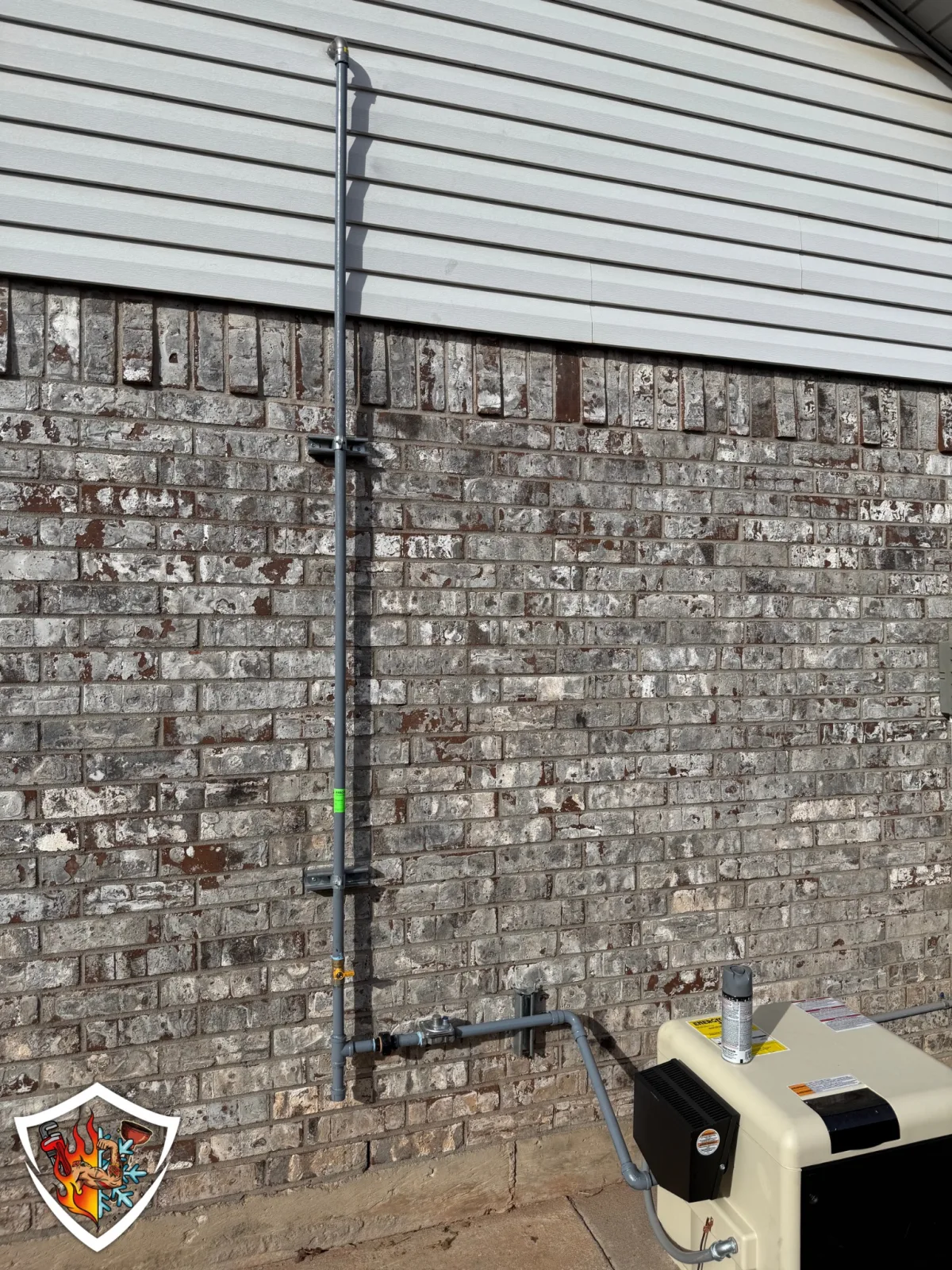
Pool Heater Gas Line Project Details
This project combined planning, utility coordination, installation, and performance verification:
- Location: Moore, Oklahoma
- New connected load: 125,000 BTU pool heater
- Whole-system gas-load calculations completed before installation
- Pipe sizing evaluated for the connected appliances and proposed system pressure
- Elevated gas-pressure request submitted and approved
- Gas-line route planned to avoid removing existing concrete
- Finished piping secured and identified at the appliance location
- Operating pressure checked with a manometer
- Connected gas appliances fired and checked under combined operation
Why Gas-Load Calculations Come Before the Pipe
Every gas appliance has an input rating, and the piping system has to deliver enough fuel when the equipment is operating. Adding a large pool heater without reviewing the total connected load, pipe lengths, pipe sizes, pressure, regulators, and appliance requirements can create poor performance or unsafe operating conditions.
For this home, the calculation and approval process supported an elevated-pressure design. That approach gave the new appliance the required capacity while allowing a practical route that preserved the customer's concrete. Approval came before the final installation, so the work followed the accepted plan rather than relying on assumptions in the field.
- Documented the existing and proposed gas-appliance loads
- Calculated the total connected demand including the 125,000 BTU pool heater
- Reviewed pipe sizing, developed length, and pressure requirements
- Submitted the elevated-pressure request for approval
- Planned a route that avoided concrete removal
- Installed and supported the new gas piping
- Verified pressure with a manometer after installation
- Started the connected appliances and confirmed proper operation
The pool heater and the home's other connected gas appliances were operating properly when TradeStrong completed the final checks.
Final Pressure and Appliance Performance Verification
A pressure test and an operating-pressure check answer different questions. Testing the installed piping helps verify its integrity, while manometer readings taken during equipment operation show whether usable pressure remains available when the appliances demand gas.
TradeStrong did not stop after connecting the pool heater. We fired the connected appliances and observed system performance so the customer received a functioning gas system, not merely a completed pipe route.
TradeStrong holds Oklahoma licensing that includes gas piping and serves Moore, Oklahoma City, Norman, and surrounding communities. Gas-system design, permitting, utility coordination, testing, and appliance startup requirements vary by project, so each installation should be evaluated on its actual connected load and field conditions.
Common Questions About Pool Heater Gas Lines
Does a new pool heater require a gas-load calculation?
The existing gas system should be evaluated before adding a pool heater. The calculation accounts for the heater's BTU input along with the home's other connected appliances, pipe sizes, developed lengths, available pressure, and applicable sizing method.
Why was elevated gas pressure requested for this project?
The approved elevated-pressure design provided a practical way to serve the added 125,000 BTU load while preserving the existing concrete. Whether that approach fits another property depends on the utility, regulators, appliance requirements, piping layout, and local approval process.
How do you verify gas appliances still perform after adding a new one?
After the required installation checks, operating pressure can be measured with a manometer while connected appliances are fired. This helps verify that the system maintains appropriate pressure under actual demand rather than only when the appliances are off.
Can every pool heater gas line be installed without removing concrete?
No. This Moore project had an approved route that avoided concrete removal. Other homes may require a different route, trenching, boring, or concrete work based on the meter, appliance location, property layout, code requirements, and utility approval.
Planning a Pool Heater or Outdoor Gas Appliance in Moore?
TradeStrong can evaluate the proposed appliance, existing connected load, available gas service, pipe route, and approval requirements before installation. That planning helps protect safety, appliance performance, and the rest of the home's gas system.
Schedule Gas Line Service