

Visit One: Find Out Why the System Would Not Cool
The initial inspection identified both a control problem and a refrigerant leak.
- The thermostat would not activate the system; bypassing it allowed the equipment to start.
- The outdoor condenser fan ran, and the compressor drew approximately 10 amps.
- Connected gauges showed no refrigerant pressure.
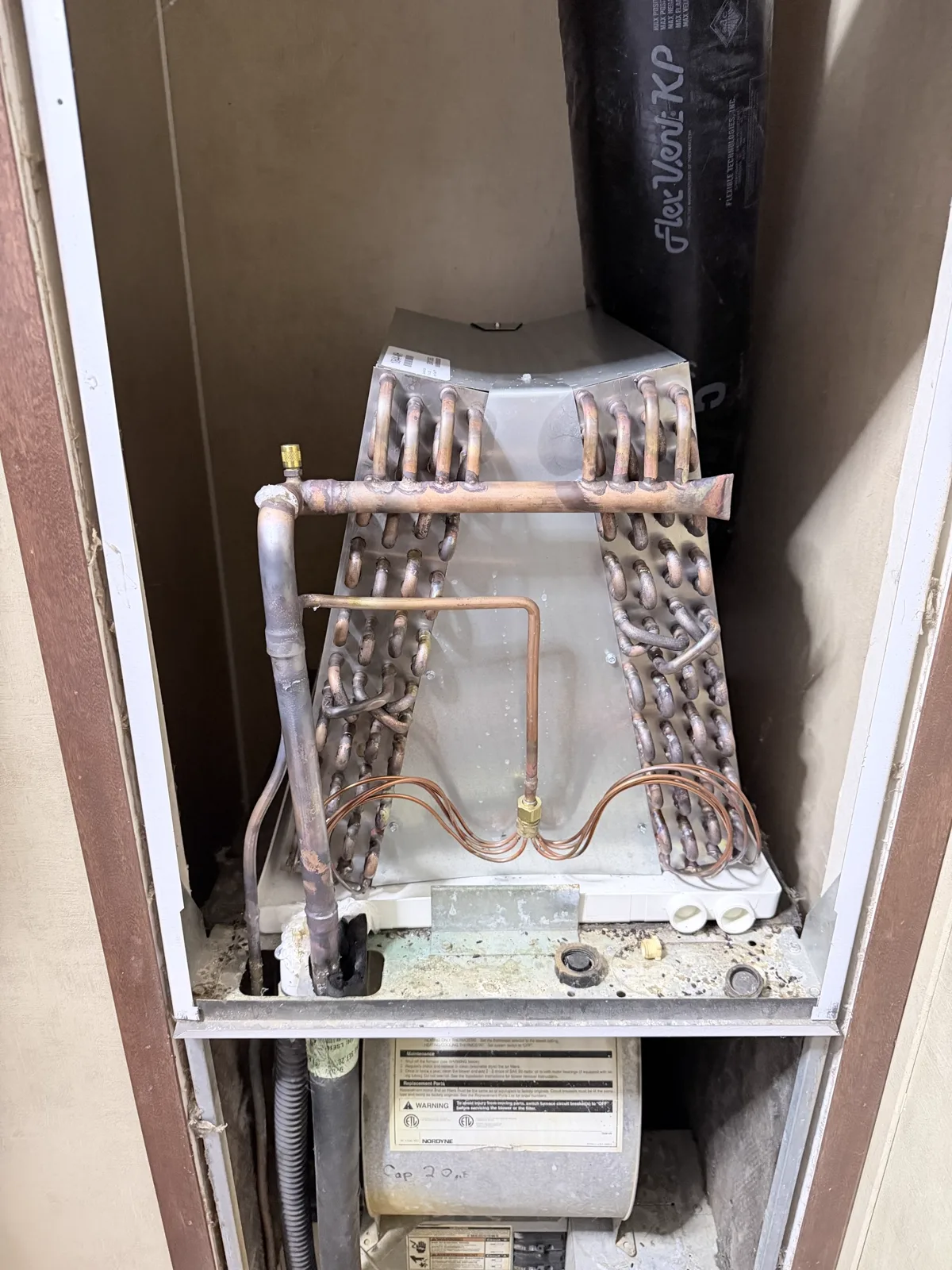
- A nitrogen leak search located the refrigerant leak at the evaporator coil.
The Recommended Repair Scope
We recommended replacing the leaking evaporator coil, recharging the system with approximately 10 pounds of refrigerant, replacing the thermostat, and making a minor low-voltage repair to the thermostat/control wiring going to the outdoor condenser. Startup and testing were included in the recommended scope.
After the first visit, we were checking equipment availability and preparing an estimate. The second visit documents the coil replacement and cooling checks. It does not separately confirm completion of the thermostat replacement or low-voltage wiring repair.
Visit Two: Replace the Coil and Restore Cooling
We removed the leaking evaporator coil and installed the replacement. Each step that followed prepared the refrigerant circuit for charging and operation.
- Flowed nitrogen while brazing the copper refrigerant connections to help prevent internal oxidation.
- Pressure tested the completed connections; the test held with no leaks detected.
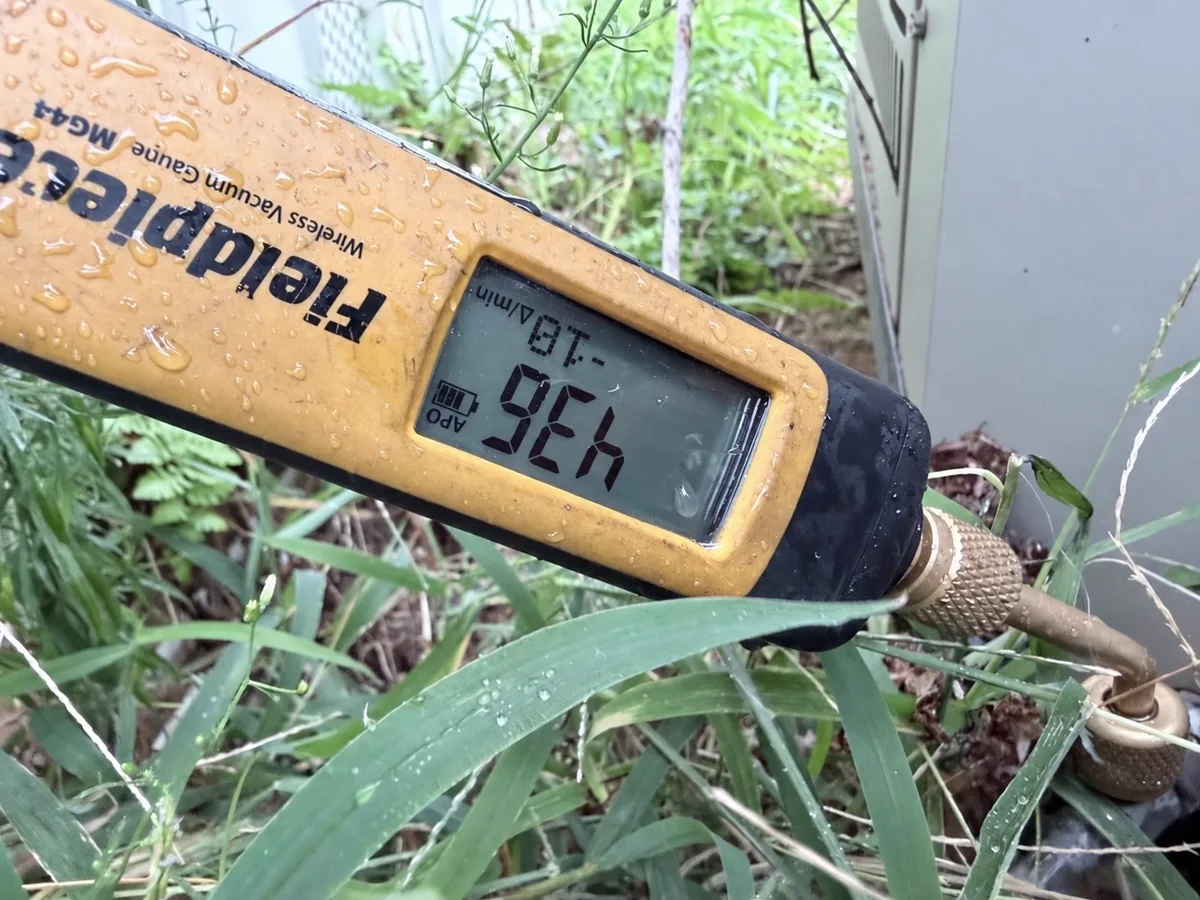
- Pulled a vacuum below 500 microns to remove moisture and non-condensables.
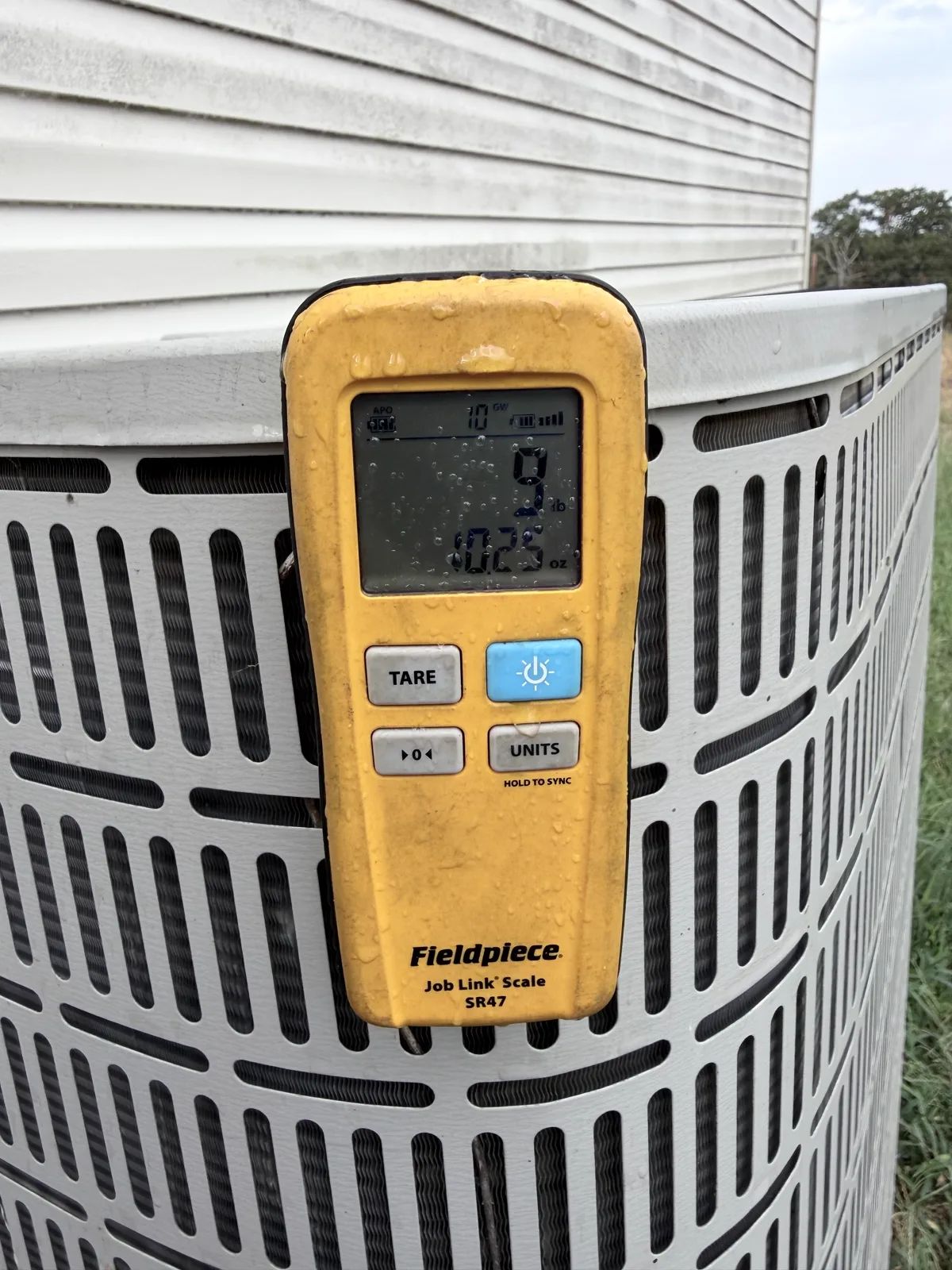
- Added approximately 10 pounds for the factory charge, plus additional refrigerant needed for the system and line set.
- Started the system and checked and adjusted refrigerant operating conditions.
- Verified operating pressures, temperatures, and the indoor temperature split.
The final service notes report a good indoor temperature split and proper cooling upon departure. An exact final refrigerant total and numerical temperature split were not recorded in the supplied summary.
What the Final Checks Tell the Homeowner
The pressure test checked the repaired circuit for leaks under the test conditions. Evacuation prepared the circuit for refrigerant, and the startup checks verified cooling performance at the end of the visit.
For a home sale, keep both service summaries together with the invoice and any equipment or warranty paperwork. The first summary explains the diagnosis; the second records the completed coil replacement and the system's condition upon departure.
Field Video
A Closer Look at the Evaporator Coil
Jobsite footage of the indoor coil from this project.
Evaporator Coil Inspection Footage
A close-up view of the indoor evaporator coil and refrigerant tubing. The first-visit service notes document the confirmed coil leak.
Questions About This HVAC Inspection and Repair
Why inspect the HVAC system before selling a home?
An inspection can identify operating problems and clarify the repair scope before a sale. On this visit, it uncovered a thermostat issue and a confirmed evaporator coil leak, giving the homeowner a record of the findings and recommended work.
Why was the outdoor unit running if the AC could not cool?
Running components alone do not confirm cooling performance. On this job, the condenser fan and compressor ran after the thermostat was bypassed, but the gauges showed no refrigerant pressure. The nitrogen leak search then identified a leak at the indoor coil.
How was the evaporator coil leak found?
After finding no refrigerant pressure, TradeStrong pressurized the system with nitrogen and performed a leak search. The first-visit notes identify the evaporator coil as the confirmed leak location.
Why replace the coil instead of just adding refrigerant?
The coil had a confirmed leak. Adding refrigerant alone would leave that leak in place. The repair addressed the leaking component before the system was recharged and tested.
Was the entire air conditioning system replaced?
No. The return-visit summary documents replacement of the evaporator coil, followed by pressure testing, evacuation, charging, and startup checks. It does not describe replacement of the outdoor condenser or the entire HVAC system.
Why was nitrogen used during brazing?
Nitrogen was flowed through the refrigerant tubing while the copper connections were brazed to help prevent oxidation inside the system. A separate pressure test followed the completed connections.
What does a vacuum below 500 microns mean?
Microns measure the low pressure reached during evacuation. The technician recorded pulling the circuit below 500 microns to remove moisture and non-condensables before adding refrigerant. Evacuation was one part of the process, alongside the pressure test and operating checks.
How much refrigerant was added?
The return-visit notes report approximately 10 pounds for the factory charge, plus the additional refrigerant needed for the system and line set. They do not give an exact final total. The scale photo shows a reading during charging and should not be treated as the total charge.
Were the thermostat and control wiring repaired too?
Both were recommended after the first inspection. The supplied return-visit summary confirms the coil replacement and proper cooling, but does not separately document thermostat replacement or the low-voltage wiring repair. Contact TradeStrong to confirm those items against the final work order.
Was the system cooling when the repair was finished?
Yes. The technician checked operating pressures and temperatures, adjusted refrigerant conditions, and reported a good indoor temperature split. The system was cooling properly upon departure.
How much did this evaporator coil replacement cost?
The supplied job summaries do not include a price. Contact TradeStrong for an estimate based on your equipment, the compatible replacement coil, access, and the refrigerant and other work required.
Preparing to Sell, or Dealing With an AC That Will Not Cool?
TradeStrong HVAC & Plumbing can inspect your system, explain the findings, and provide an estimate for recommended repairs. Contact us with questions about this project or to schedule service.
Explore AC Repair Services