

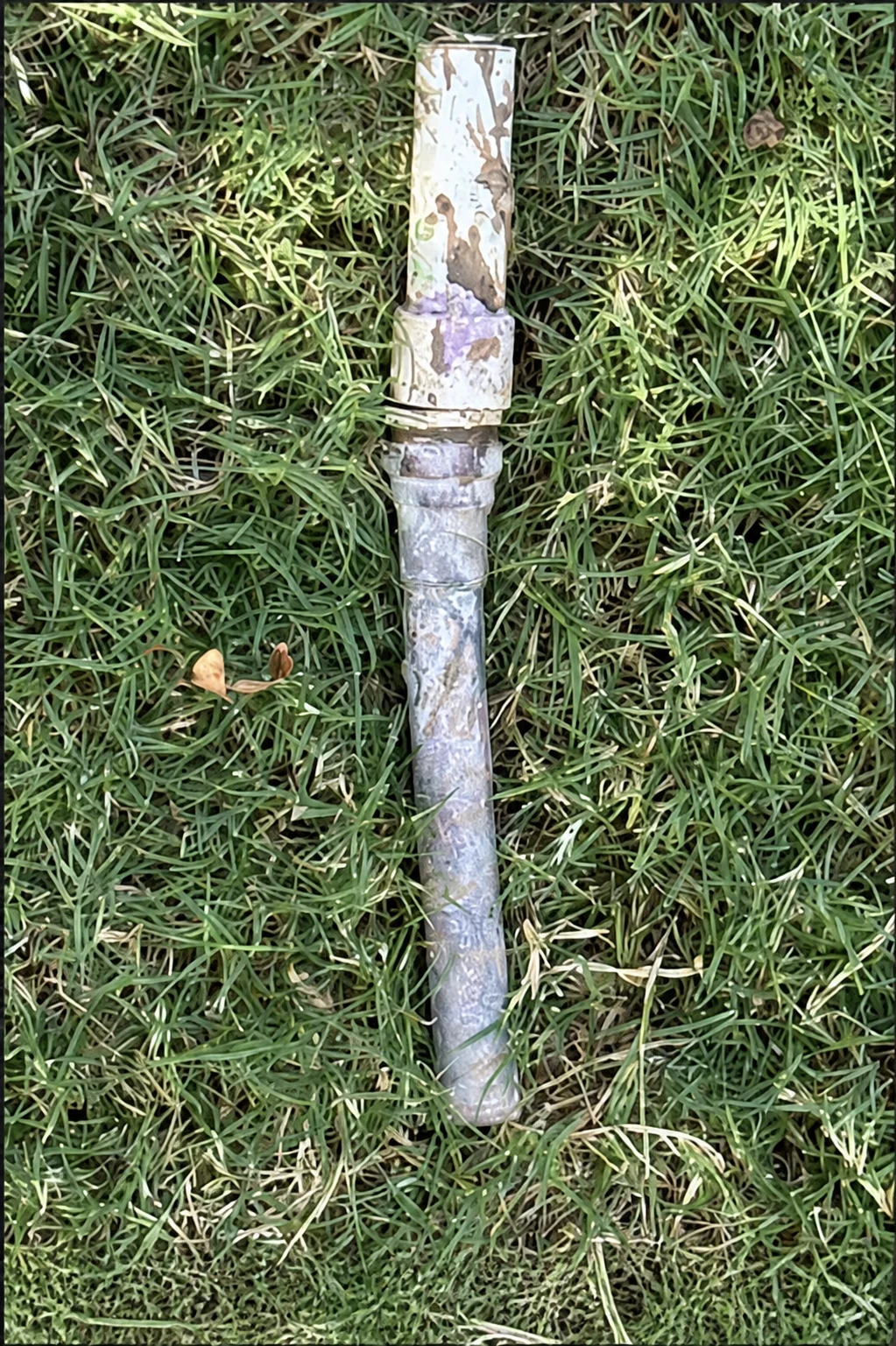
What Was the Front-Yard Water Line Made Of?
Many Oklahoma City-area homes built from the 1980s forward have a PVC water service in the yard, but the pipe material can change as the line approaches the house. On this property, PVC transitioned to copper at the home connection through a threaded plastic-to-metal fitting—the exact point that failed.
- Location: South Oklahoma City, Oklahoma 73170
- Symptom: Unexplained wet spot in the front yard
- Pipe in the yard: PVC water-service line
- Pipe at the home: Copper
- Failed part: Split PVC male adapter at the copper female connection
- Leak confirmation: Route verified with professional leak-location equipment
- Repair: PVC glue-to-crimp and copper ProPress-to-crimp transitions
- Bridge material: Approximately two feet of PEX
- Final check: Water restored and repair observed for about 20 minutes
- Result: No visible leakage before backfill
How We Repaired the Buried PVC-to-Copper Transition
A wet patch can surface several feet away from the actual break because water follows the easiest path through disturbed soil, utility trenches, and roots. The main valve location also does not guarantee the service-line route. Accurate leak location helped us avoid unnecessary excavation and find the failed adapter.
For this repair, we used mechanically crimped and pressed transitions designed for the materials being joined. We do not rely on push-to-connect fittings such as SharkBite for a buried, inaccessible repair. Product listings and local requirements can vary, but our standard is a durable connection that can be properly prepared, pressed or crimped, pressure-tested, and documented before it is covered.
- Checked the meter and evaluated where water was surfacing
- Confirmed the service-line route with a leak-location specialist
- Excavated at the verified failure area
- Removed the split PVC male adapter and damaged transition
- Solvent-welded a PVC glue-to-crimp adapter
- ProPressed a copper-to-crimp adapter onto the copper line
- Connected the two sides with a short PEX bridge and crimp rings
- Restored water and inspected the live repair for about 20 minutes
- Backfilled after confirming no visible leakage
The home’s water service was restored the same day. More importantly, the failed plastic-to-metal transition was replaced with a serviceable sequence of material-specific connections instead of another buried threaded plastic adapter.
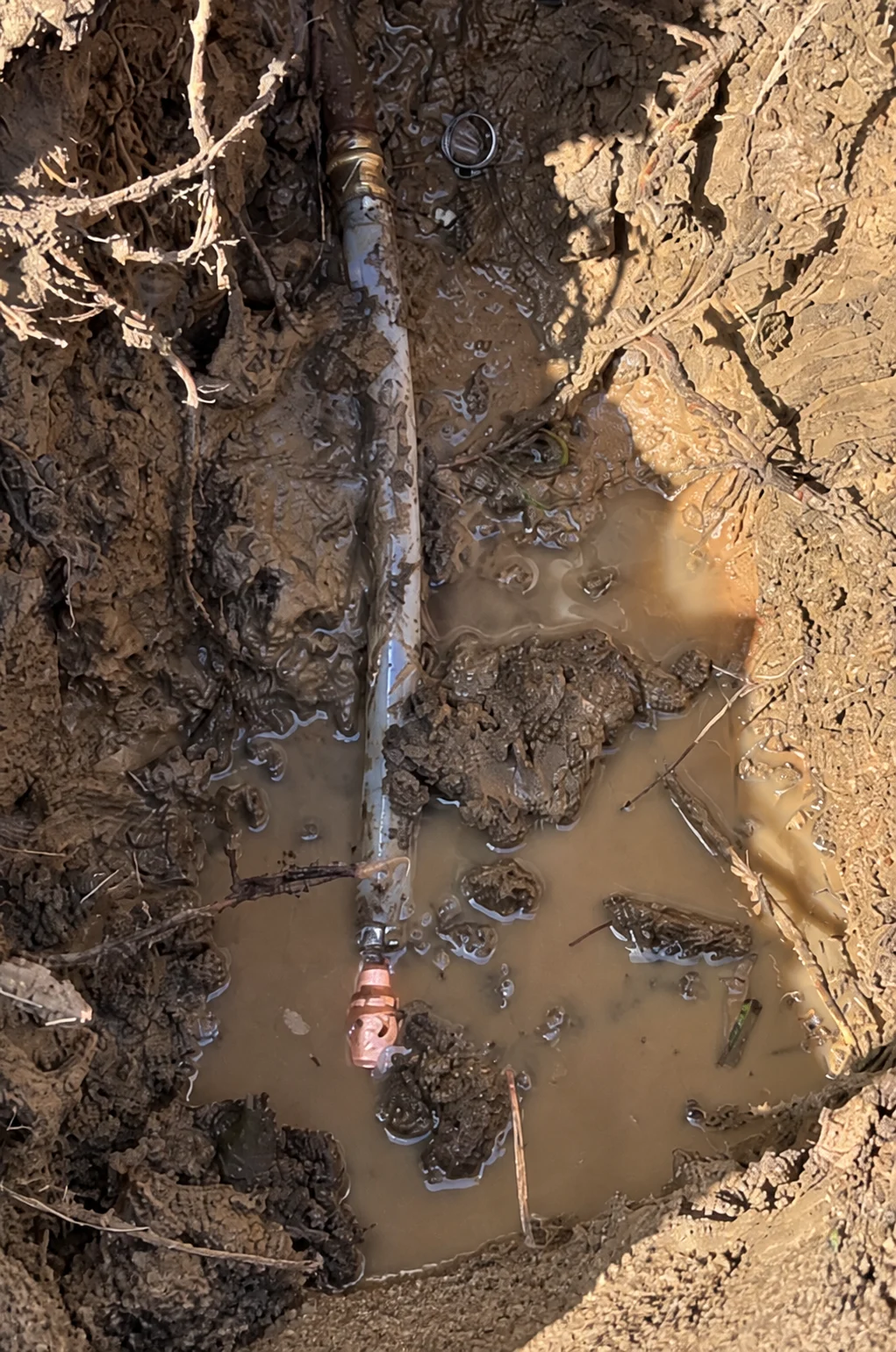
If I Get a Wet Spot in My Yard, What Is the Next Step?
First, make sure absolutely no water is being used. Turn off every faucet and shower, stop the dishwasher and clothes washer, do not flush toilets, and make sure ice makers, water softeners, pool fillers, sprinkler systems, and irrigation are not running. Wait for any appliance fill cycle to stop completely. Then carefully open the city meter box without forcing the lid or touching utility wiring. On an analog meter, watch the small triangle, star, or low-flow dial. If it moves while everything is off, water is passing through the meter. On a digital meter, activate the display if needed and look for a changing last digit, a non-zero GPM or flow-rate screen, a moving arrow, or a leak icon. Meter displays vary, so compare the face to your utility’s instructions.
If the meter shows flow, close the home’s main shutoff and check again. Continued movement can point toward the service line between the meter and the house shutoff; stopped movement generally moves the investigation inside the house or to a branch beyond that valve. Do not operate the utility’s curb stop unless your water provider authorizes it.
If the analog indicator keeps spinning or the digital meter still shows flow after every water user is off, take a photo or short video of the meter, note the time, and call TradeStrong at (405) 641-0377. We can help confirm the leak, narrow down whether it is in the service line or the home, and coordinate accurate leak location before excavation. Fast action limits water loss and soil erosion.
Homeowner Leak Check
See What to Look for on Analog and Digital Water Meters
This City of Gilbert water-conservation video shows several common meter styles and what homeowners should watch while checking for unexpected water flow. Your Oklahoma City meter may look different, but the analog low-flow indicator and digital flow-reading principles are similar.
Common Questions About Front-Yard Water-Line Leaks
What is my water line in my front yard made of?
It depends on the age of the home and prior repairs. Many homes built from the 1980s forward in the Oklahoma City area have PVC service piping in the yard. The material may change near the house; on this project, PVC connected to copper through a PVC male adapter threaded into a copper female fitting. Identification requires seeing the pipe or reviewing reliable records—not guessing from the home’s age alone.
If I get a wet spot in my yard, what is the next step?
Turn off every known water user—including faucets, toilets, the dishwasher, clothes washer, ice maker, water softener, pool filler, sprinklers, and irrigation—then check the city meter. Movement at an analog low-flow indicator, changing digits or a non-zero flow reading on a digital display, or a meter leak symbol can indicate water is still flowing. Photograph the reading and call TradeStrong at (405) 641-0377. Do not assume the break is directly below the wet spot.
How can I tell whether an analog water meter shows a leak?
With all water uses off, watch the small triangle, star, silver wheel, or low-flow indicator on the meter face. Any continued movement means water is passing through the meter. For a very slow leak, record the reading, avoid using water for a set period, and see whether the reading changes.
How can I tell whether a digital water meter shows a leak?
Digital meters vary. Look for a GPM or flow-rate screen above zero, a changing right-hand digit, a moving flow arrow, or a leak icon while all fixtures and irrigation are off. Some displays must be activated with light or a sensor, and some leak icons reflect usage history rather than live flow, so follow the meter or utility instructions.
Can SharkBite fittings be buried underground?
Some push-to-connect products may carry specific underground approvals when installed exactly as listed, sometimes with required wrapping. TradeStrong did not use one here and does not choose push-to-connect fittings for this inaccessible buried repair. We used solvent-welded, crimped, and ProPress transitions that could be prepared and verified before backfill.
Have a Wet Spot or Suspected Water-Line Leak in Oklahoma City?
TradeStrong can check the meter, coordinate accurate leak location, expose the failed section, and explain the repair options before replacing buried piping. We serve south Oklahoma City and nearby metro communities with licensed plumbing diagnosis and repair.
Schedule Water-Line Service